Understanding Basement Backups
Basement backups are unpleasant, stressful and pose potential health risks and property damage. Fortunately, there are steps you can take to minimize the risk and protect your home.
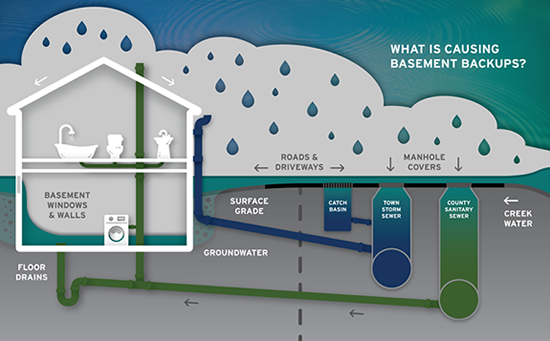
Basement backups occur when wastewater reverses flow back into your basement. This can be caused by a variety of factors including:
- Blockages in the sewer line
- Inflow during heavy rainfall overwhelming the sewer system
- Tree roots infiltrating sewer pipes
By taking preventive measures, you can reduce the risk of basement backups and protect your home from potential damage. However, if you or your licensed plumber find there may be a problem in the public sewer, please don’t hesitate to give us a call at our 24/7 response line to request an inspection at (315) 435-3157.
Preventing Basement Backups
Don’t Create FOG Clogs!
Fats, Oils, and Grease (FOG) and items other than toilet paper should never be flushed or poured down the drain. FOG, so-called flushable wipes and other hygiene products get stuck in pipes and create clogs. Wipes and other products do not break down in water as toilet paper does. When in doubt, throw it out! Do you know what else doesn’t belong in your drain?
Check for unnecessary connections to the sewer system
Sump pumps, roof drains and gutters connected to the sanitary sewer can lead to capacity issues preventing proper drainage and overwhelming the system. Groundwater and stormwater don’t need to be treated like wastewater. Stormwater and groundwater discharge should be redirected to drain to your yard, rain garden or a rain barrel, which can be found at home improvement stores.
Disconnect basement sewer connections
If you have a basement sewer connection that you don’t need, consider eliminating it or redirecting it away from the sanitary system. It serves as another point of entry for wastewater to back up into your home.
Plug the Floor Drain
Basement floor drains can help move water out of your basement, but if they connect to the sanitary sewer system, floor drains can also become an entry point for wastewater backup into your home. If unable to disconnect from the sanitary sewer, consider installing a plug or one-way drain.
Install a Backwater Valve
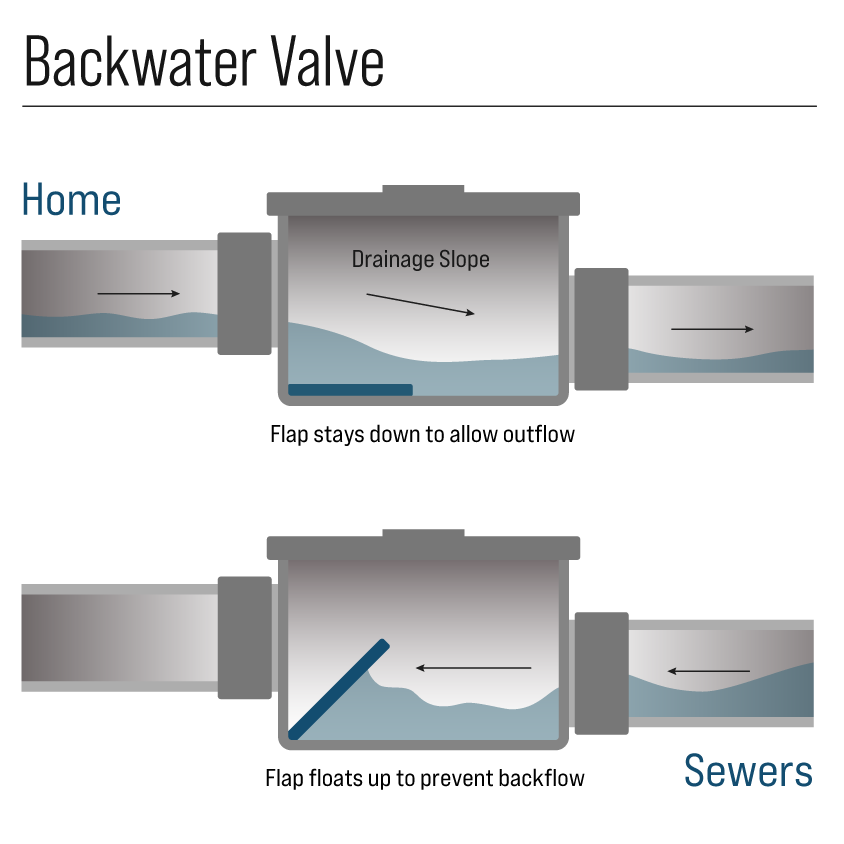
A backwater valve is a device installed on the main sanitary exit pipe to prevent sewage from flowing backward into the structure plumbing. The backwater valve contains a flap that lays flat under normal conditions. In the event backflow from the sewer system occurs, this flap floats up to block backflow from going further. Installation should be done by a licensed plumber. It’s also important to have your backwater valve inspected and cleaned regularly to ensure it will work when needed.
Note: When your backwater valve is preventing backflow, it is also preventing flow from leaving your home and entering the sewer system during the backflow event.
Be mindful of your sewer lines before planting
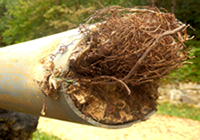
Tree roots are naturally inclined to grow toward moisture and when it comes to a sewer line, they can find all the moisture they need. Roots can intrude and continue to grow and multiply, eventually clogging the sewer pipe and even cracking it.