
WE NEED IT!
The sewer system is vital to our community. You can help keep our pipelines flowing and reduce your risk of plumbing clogs and back-ups. Learn more about Fats, Oils, Grease, and Unflushables.

Have you ever wondered what happens to water after it goes down the drain or the toilet?
It might seem like it just disappears, but in reality, it embarks on a journey through the sewer system.
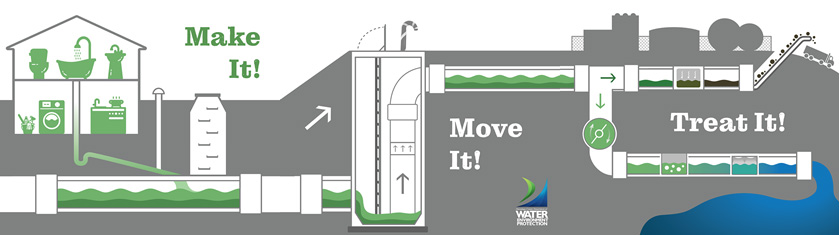
Every time you use water at home, it flows into a series of pipes connected to your sinks, toilets, and appliances. These small pipes leave your home and connect to larger sewer pipes that collect wastewater from your neighbors, local businesses, and industries.
The collected wastewater travels miles to treatment plants through a network of underground pipes. The majority of these pipes use gravity to move wastewater. But in flat or hilly areas, pump stations give wastewater a lift to higher ground or use pressure to move it over long distances.
Before reaching its final destination, wastewater goes to a treatment plant where contaminants and other harmful substances are removed.
The sewer system is vital to our community. You can help keep our pipelines flowing and reduce your risk of plumbing clogs and back-ups. Learn more about Fats, Oils, Grease, and Unflushables.
By safely transporting and treating wastewater, it prevents the spread of waterborne illnesses like cholera, dysentery, and hepatitis. Effective wastewater management ensures that these harmful microorganisms are removed, significantly reducing public health risks.
Untreated wastewater contains chemicals, heavy metals, and nutrients that can lead to pollution of our rivers and lakes. Proper treatment prevents these contaminants from entering natural water bodies, protecting aquatic ecosystems and maintaining water quality.
Our sewer system supports community growth by providing the necessary infrastructure for sanitation and hygiene. It enables the safe disposal of wastewater, which is fundamental for development and expansion. And by maintaining clean and safe water bodies, the sewer system allows us to enjoy natural parks and recreational areas, enhancing our quality of life.
Investing in sewer infrastructure not only improves public health and environmental quality but also provides economic benefits. Clean water and sanitation are crucial for attracting businesses and supporting tourism, which can drive economic growth and development.
Modern sewer systems often incorporate technologies for water reuse and resource recovery, promoting sustainability. Treated wastewater can be repurposed for agricultural irrigation, industrial processes, or even replenishing groundwater supplies. This reduces the demand for fresh water and supports sustainable water management practices.