History
Wastewater Management in Onondaga County
We’ve come a long way from the use of outhouses and creeks to hundreds of miles of sewer pipes and advanced treatment facilities, all protecting public health and the environment. What began as simple channels to move waste further away from homes has evolved into a complex, high-tech system managing millions of gallons of wastewater every day. From cleaner waterways to climate-smart innovations – See how far we’ve come!
1794 • Onondaga County established, becoming New York’s 21st county [CNYHistory.org →]
1824 • Erie Canal completed, stretching from Albany to Buffalo through Syracuse [ErieCanalway.org →]
1825 • Village of Syracuse established [Syracuse.com →]
1841 • First State Fair in the United States held in Syracuse. [NYSFair.NY.Gov →]
Every summer, NYS Fairgoers and vendors add to local wastewater volume managed by WEP.
1841 • Erie Canal completed, stretching from Albany to Buffalo through Syracuse. It is enlarged again in 1862 and 1916, [ErieCanalway.org →] • The Canal is later nicknamed the “Mother of Cities,” because it gave rise to cities, towns and villages, with travelers and immigrants using the Erie Canal for business, pleasure, and to establish homes around New York. Canal transportation leads to an increase in populations around the Village of Syracuse.
1847 • City of Syracuse established when the Villages of Syracuse and Salina merge in December
1848 • City of Syracuse officially incorporated
1850 • US Census Population: Onondaga County 85,890 / City of Syracuse 22,271
As our population changes, so does the need for adjustments in wastewater treatment and infrastructure.
1868 • Syracuse Sewage Commission established
1872 • Syracuse Sewage Commission grants rights to use creeks for disposal
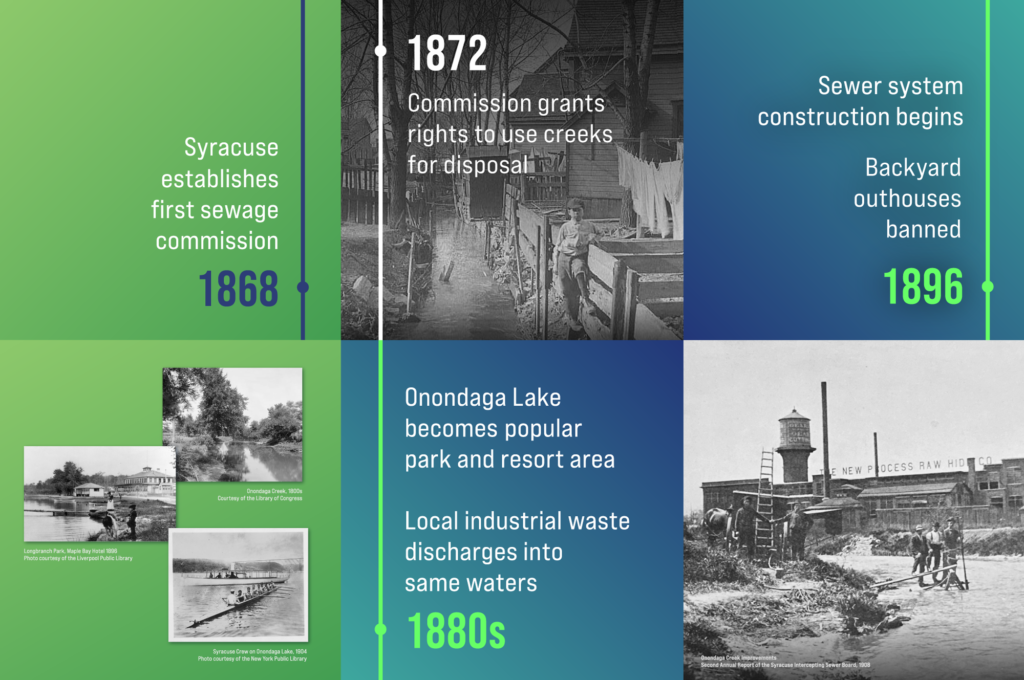
1880s • Onondaga Lake becomes popular resort area; industrial waste discharges into same waters • Including amusement parks, fishing, and family recreation, the resort areas boosted tourism while adding to wastewater discharge in Onondaga Lake.
1896 • First sewers built in City of Syracuse; backyard outhouses banned • Syracuse’s combined sewer system is still in use today, transporting rainwater as well as wastewater to facilities for treatment during high water flow events. [Syr NY, Property Cons, ch27] §72-j (§52-c)
1900 • US Census Population: Onondaga County 168,735 / City of Syracuse 108,374
1900s • Local water pollution and area flooding are growing concerns
1901 • Onondaga Lake Ice harvesting banned
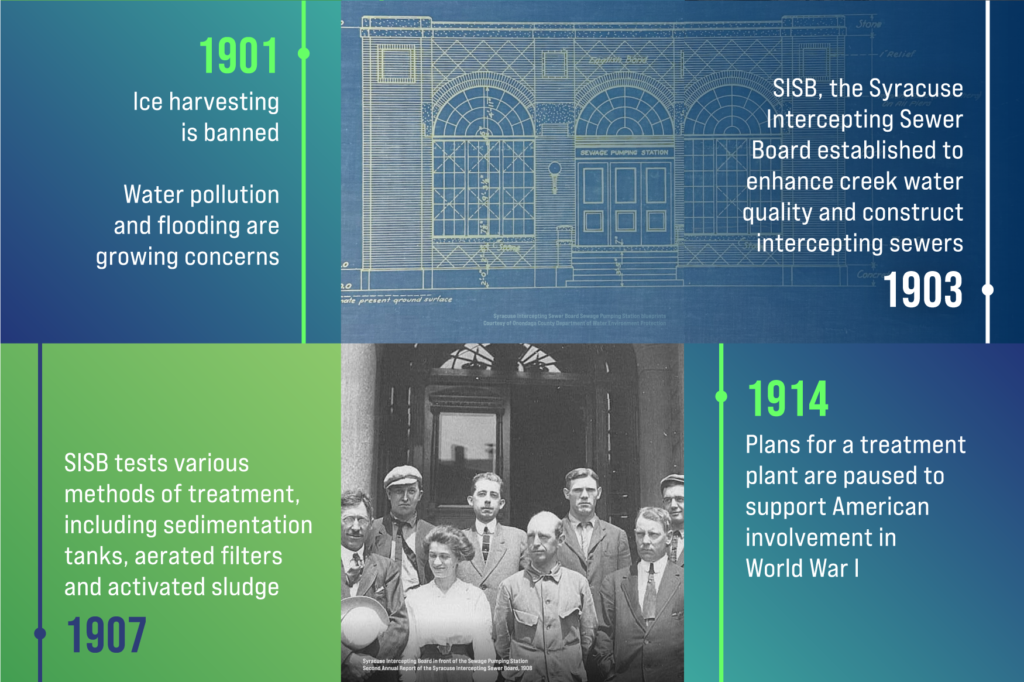
1903 • Syracuse Intercepting Sewer Board (SISB) established to enhance creek water quality and construct intercepting sewers
1907 • SISB tests various methods of treatment including sedimentation tanks, aerated filters, and activated sludge
1914 • World War I begins; plans for a sewage treatment plant are paused to support American involvement in the war [Syracuse.com →]
1917 • Camp Syracuse, established at the NYS Fairgrounds, was home to thousands of WWI soldiers [Military.com →] • Located on the NYS Fairgrounds, between 1917-1918 around 40,000 US soldiers passed through Camp Syracuse, alongside over 130,000 fairgoers each year, adding immense amounts of sewage and waste to local waterways.
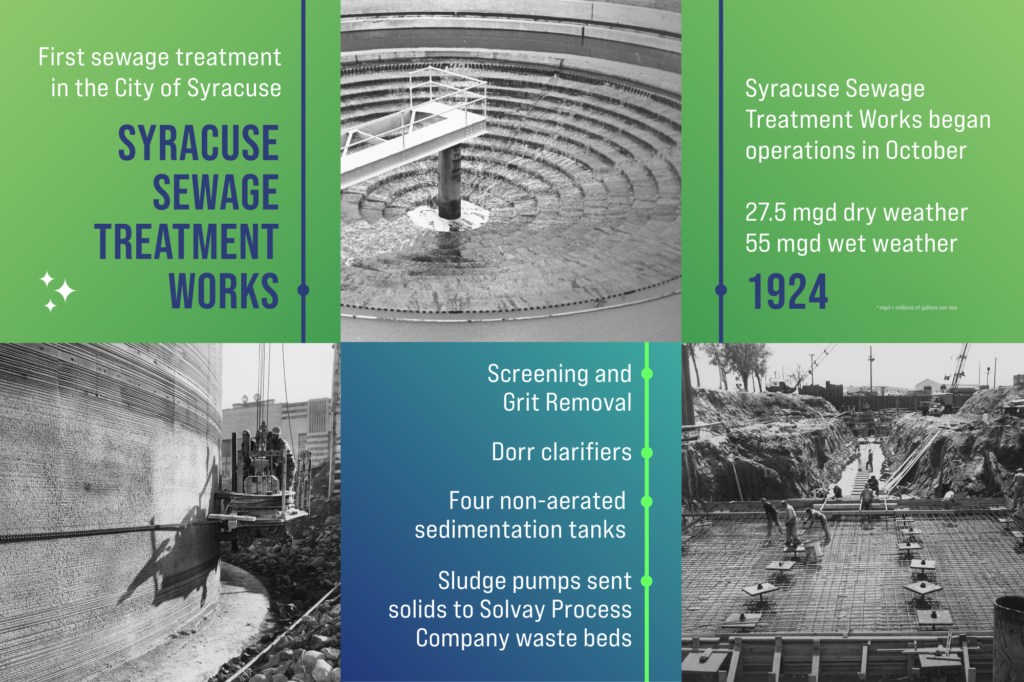
1924 • Syracuse Sewage Treatment Works [Metro WWTP →]
Serves 85% of City of Syracuse
27.5 mgd (millions of gallons per day) dry weather; 55 mgd wet weather
Located on Hiawatha Boulevard West, this treatment facility is still the largest in Onondaga County, renamed in 1950 to the Metropolitan Syracuse Wastewater Treatment Plant or Metro Syracuse.
1924 • General Description of the Sewage Treatment Works and Other Improvements Constructed by the Syracuse Intercepting Sewer Board [SISB Publication pdf →]
1930s • Federal Works Progress Administration (WPA) project updating the Ley Creek drainage ditch into the Ley Creek Sewer System completed in 1940 [LivingNewDeal.org →]
1933 • Onondaga County Sanitary Sewer and Public Works Commission created to oversee construction and maintenance of public sanitary system infrastructure and facilities
1940 • Swimming banned in Onondaga Lake
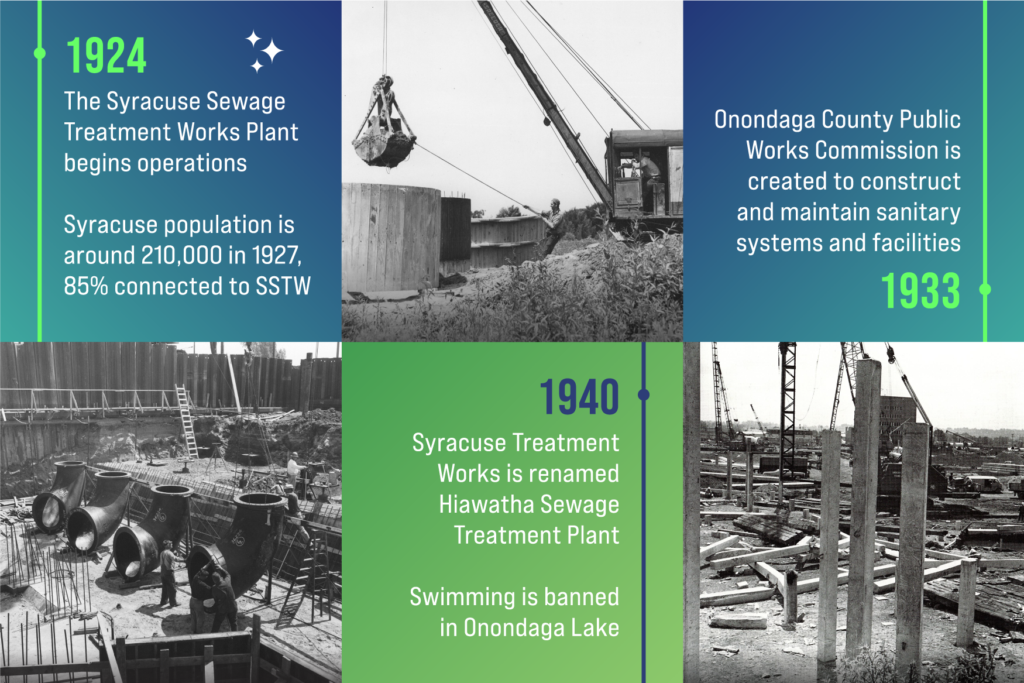
1948 • Syracuse Sewage Treatment Works (SSTW) renamed Hiawatha Sewage Treatment Plant
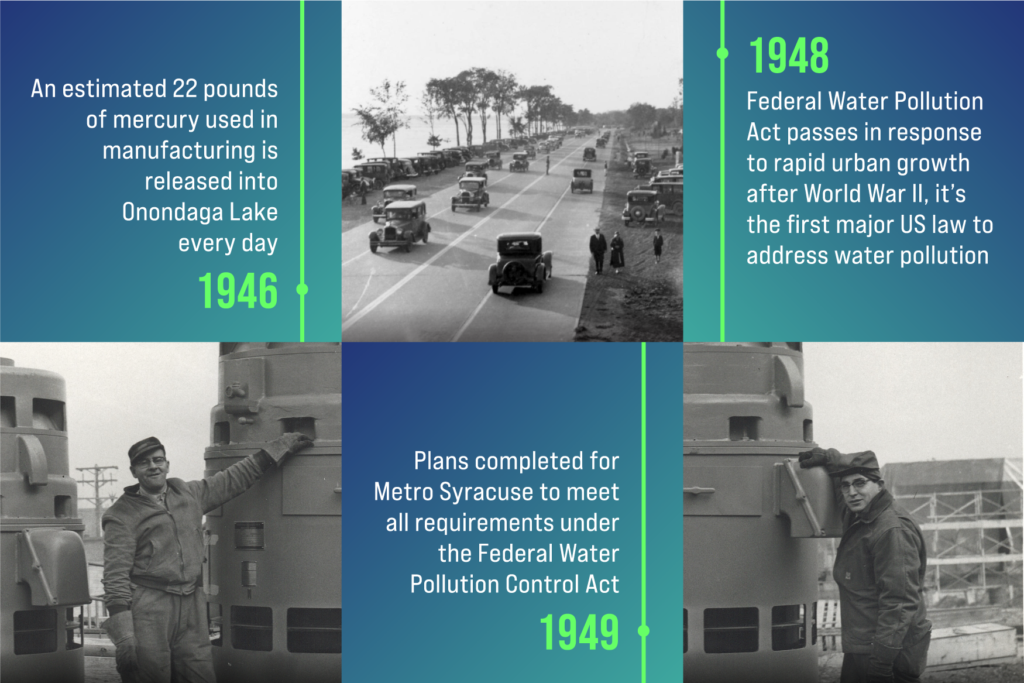
1946 • About 22 pounds of mercury used in manufacturing discharges to Onondaga Lake every day
1948 • Federal Water Pollution Control Act passes in response to rapid urban growth after World War II, the first major US law to address water pollution [EPA.gov →]
1949 • Plans completed for Metro Syracuse to meet all requirements under the Federal Water Pollution Control Act
1950 • US Census Population: Onondaga County 341,719 / City of Syracuse 272,405 [US Census →]
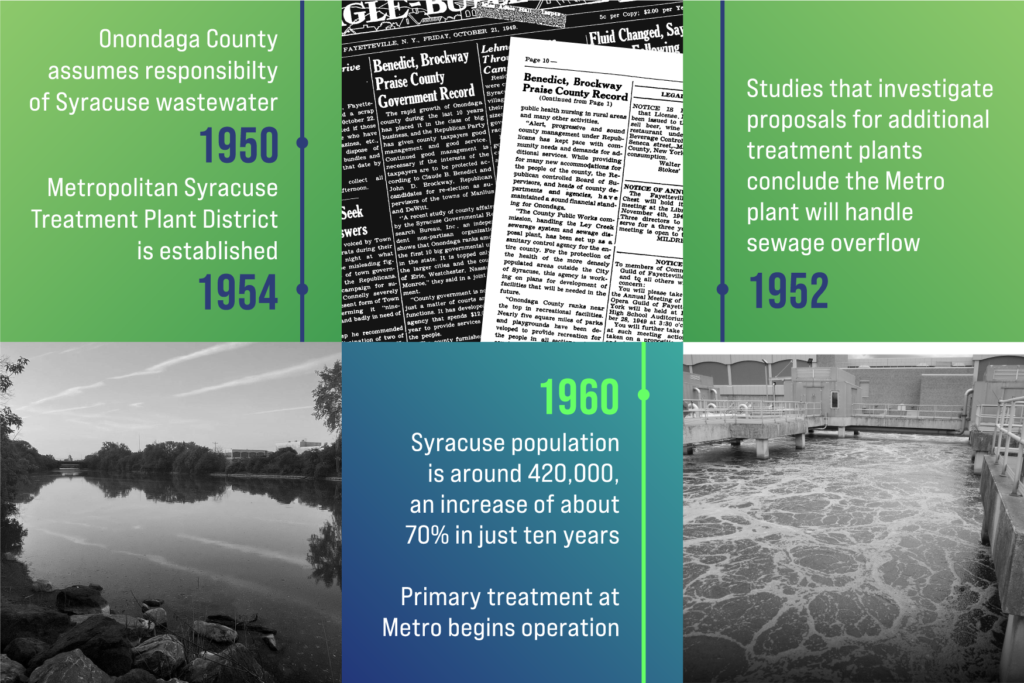
1950 • Onondaga County assumes responsibility for Syracuse wastewater management; renames Hiawatha Sewage Treatment Plant to Metropolitan Syracuse Treatment Plant (a/k/a Metro Syracuse)
1952 • Studies that investigate proposals for additional treatment plants conclude the Metro plant will handle sewage overflow
1954 • Onondaga County establishes Metropolitan Syracuse Treatment Plant District
1958 • Interstate Route 81 construction begins, connecting Canada to Pennsylvania through the center of New York State and the City of Syracuse, completed in 1969 [What to Name I-81 / Syr.com →]
Many highway travelers stop and stay in Syracuse, adding to local wastewater volume.
1960 • Primary treatment at Metro Syracuse Treatment Plant begins
1967 • Lakeshore Sanitary District created
1972 • Federal Clean Water Act includes discharge permits and grant funds for treatment plants [EPA.gov →]; New York State bans phosphorus in laundry detergent
1973 • Meadowbrook-Limestone Wastewater Treatment Plant [MBLS WWTP →]
Serves portions of Syracuse, DeWitt, Manlius, and Pompey
4.3 million gallons per day (mgd) average; 6.5 mgd capacity
MBLS addresses pollution issues, improving water quality in Limestone Creek.
1974 • Brewerton Water Pollution Control Plan opens [Brewerton WPCP →]
Serves portions of Cicero and Bridgeport
1.9 mgd average; 3.0 mgd capacity
WPCP replaced three smaller plants: Beechwood Farms, Harbour Village, and Oneida Park.
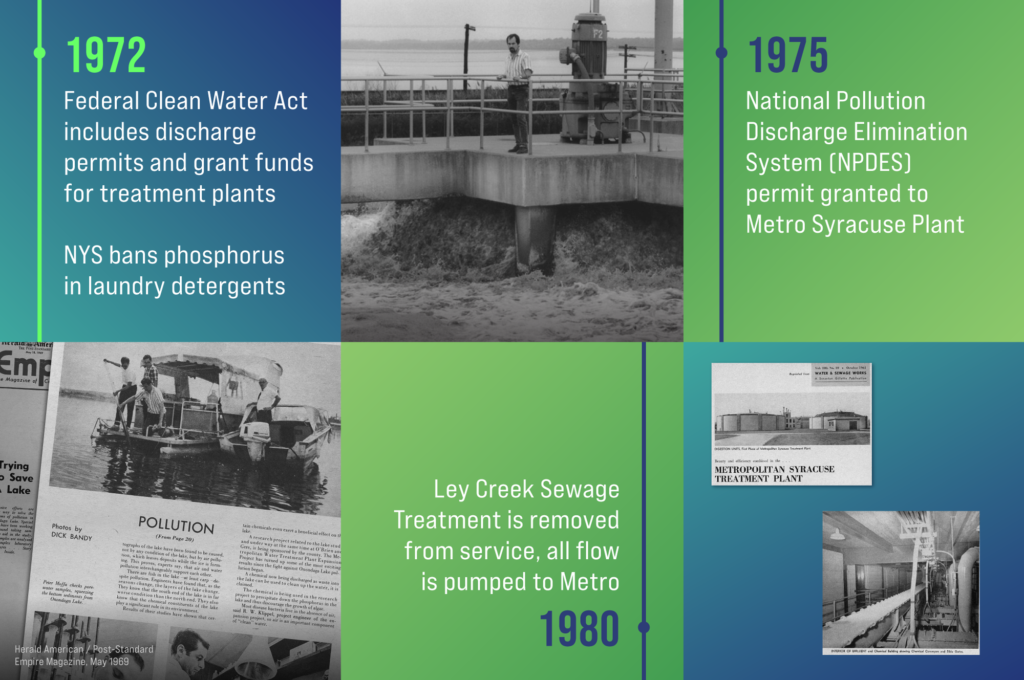
1975 • National Pollution Discharge Elimination System (NPDES) permit granted to Metro Treatment Plant
1976 • Wetzel Road Wastewater Treatment Plant [Wetzel Road WWTP →]
Serves portions of Clay and Salina
3.5 mgd average; 10.3 mgd capacity
Onondaga County combined three sanitary districts, requiring improvements made to this facility, formerly named the Morgan Road Treatment Plant.
1978 • Expansions completed at Metro Treatment Plant and full operations begin, including “advanced treatment” upgrades to bring Metro to EPA standards / Increased to 80 mgd dry weather; 120 mgd wet weather
1980s • Onondaga Lake improves, but does not meet federal water quality standards
1980 • Ley Creek Sewage Treatment is removed from service, all flow is pumped to the Metro Syracuse facility
1981 • Oak Orchard Wastewater Treatment Plant [Oak Orchard WWTP →]
Serves most of Clay and portions of Cicero
5.4 mgd average; 10.0 mgd capacity
Replaced Davis Road Treatment Plant which was repurposed as a pump station.
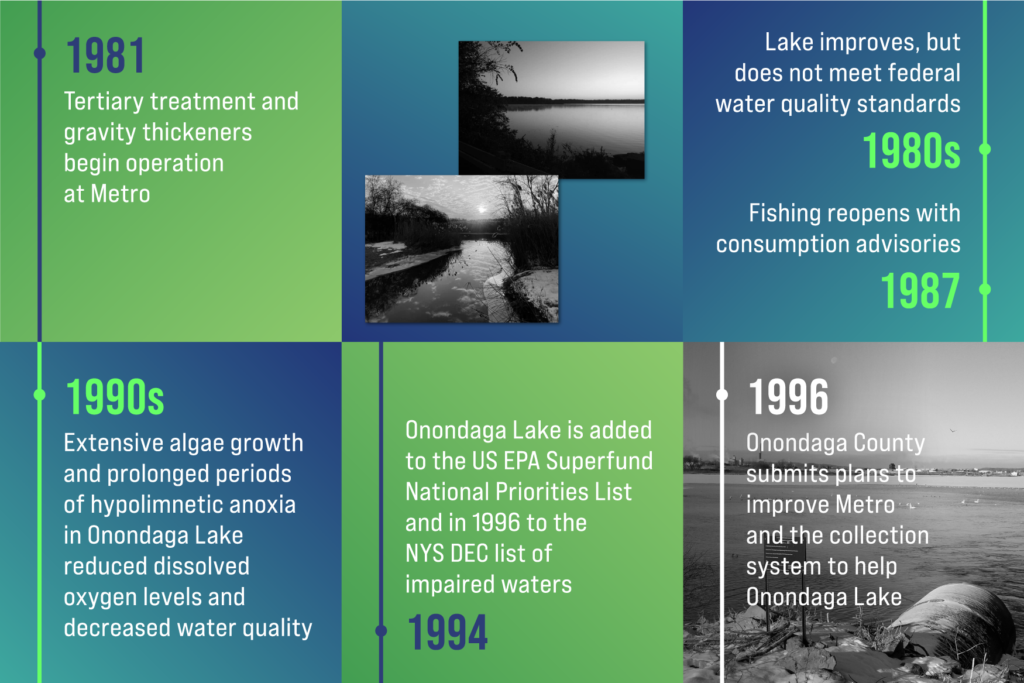
1981 • Tertiary treatment and gravity thickeners begin operation at Metro Syracuse
1982 • Baldwinsville-Seneca Knolls Wastewater Treatment Plant [BSK WWTP →]
Serves portions of Lysander, Van Buren, and Clay
3.0 mgd average; 9.0 mgd capacity
Replaced facilities on both sides of the Seneca River, which were converted into pump stations.
1987 • Onondaga Lake fishing ban lifted with consumption advisories
1990s • Extensive algae growth and prolonged periods of hypolimnetic anoxia in Onondaga Lake reduced dissolved oxygen levels and decrease water quality
1994 • Onondaga Lake is added to the US EPA Superfund National Priorities List [EPA →]
1996 • Onondaga County submits plans to improve Metro Syracuse and the collection system to help Onondaga Lake; Onondaga Lake is added to the NYS Department of Environmental Conservation list of impaired waters [DEC →]
2000 • US Census Population: Onondaga County 458,336 / City of Syracuse 146,464 [US Census →]
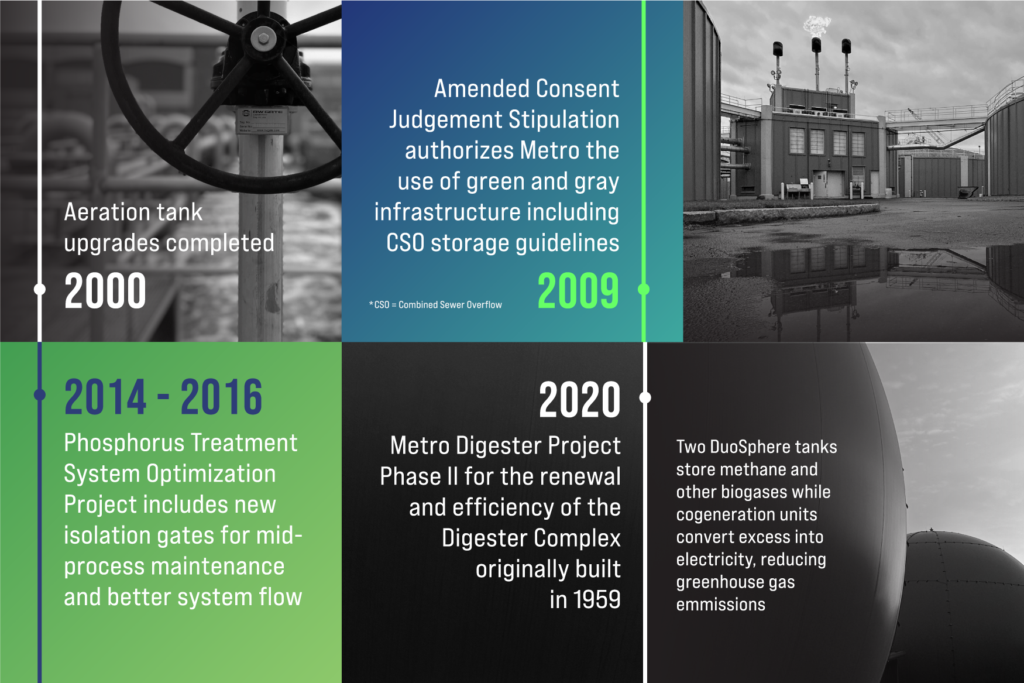
2000 • Aeration tank upgrades at Metro Syracuse completed
2009 • Amended Consent Judgement Stipulation authorizes Metro Syracuse the use of green and gray infrastructure including Consolidated Sewer Overflow (CSO) storage guidelines
2014 • Phosphorus Treatment System Optimization Project includes new isolation gates for mid-process maintenance and better system flow, through 2016
2020 • Metro Syracuse Digester Project Phase II for the renewal and efficiency of the Digester Complex (built 1959) • Two DuoSphere tanks store methane and other biogases while cogeneration units convert excess into electricity, reducing greenhouse gas emissions
2024 • Metro Syracuse celebrates 100 years of service!