Combined Sewer Overflows

Combined sewers are a characteristic design of older sewer systems, dating back to 1855 when they were introduced as a significant improvement over urban ditches running along city streets. These systems collect both sewage and stormwater in a single pipe. In Onondaga County, the City of Syracuse has a combined sewer system (CSS), while other municipalities have separate stormwater and sewer systems.
During heavy rainfall or snowmelt, the volume of water can exceed the capacity of the combined sewer system. To manage this excess flow, combined sewer outfalls discharge the surplus flow into local tributaries, resulting in combined sewer overflows (CSOs), a water pollution and public health concern because they can introduce harmful bacteria, debris, and other hazardous substances into local waterways, posing risks to people, pets, and wildlife. CSOs can cause recreational area closures, algae growth, and reduced oxygen levels in waterways, too.

Save the Rain Program
Onondaga County
Using a combination of smart grey investments and innovative green infrastructure solutions, Onondaga County WEP manages and reduces overflows through strategies and infrastructure improvements under its comprehensive stormwater management plan, Save the Rain.

Sewer Overflow Alerts
New York State
Stay informed in real-time about sewer overflow events and
other emergencies in your area through New York State.
Combined Sewer Overflow Basics
From the US Environmental Protection Agency (EPA.gov)
Illustration of a
Separate Sewer System
Most U.S. communities today have separate sanitary sewer systems. In this type of system, one set of pipes collects wastewater from homes and businesses and carries it to a wastewater treatment plant through sanitary sewers. A separate set of pipes collects stormwater from drains at the end of driveways, around parking lots, and along streets and carries it to a local waterway system through municipal separate storm sewer systems (MS4s).
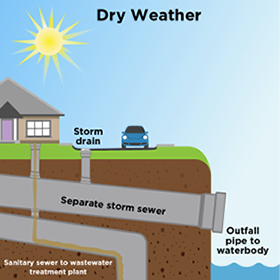
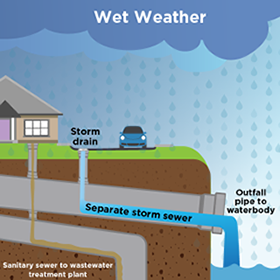
Illustration of a
Combined Sewer System
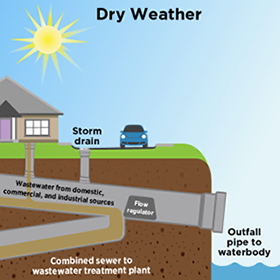
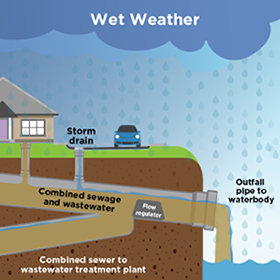
In a combined sewer system, both wastewater and stormwater flow through the same pipes. In dry weather, all wastewater flows to a wastewater treatment plant where it is treated before being discharged to a waterbody. But during wet weather, stormwater also enters the system. The combined flow of wastewater and stormwater can overwhelm the system. Permitted outfalls are located throughout the system to act as relief points during wet weather. These outfalls discharge untreated or partially treated stormwater and wastewater into nearby waterbodies. These discharges are called CSOs.