September ’26 Newsletter

About the Lab
The Forensic Laboratories provides services in six disciplines – Digital Evidence, Firearms, Forensic Chemistry, Fire Debris, Forensic Biology/DNA, and Latent Prints
Forensic Science Week 2026
The Onondaga County Center for Forensic Science Laboratories is proud to recognize the 14th Annual National Forensic Science Week, taking place September 20–26, 2026. This week is an opportunity to highlight the important work of forensic science professionals and the critical role they play in supporting investigations, the justice system, and our community.
At CFS, our team of dedicated professionals work across a variety of disciplines, including Biology/DNA, Firearms, Digital Evidence, Drug Chemistry, Fire Debris, and Latent Prints. National Forensic Science Week gives us an opportunity to celebrate the expertise, dedication, and collaboration that make this work possible every day.
ANAB Onsite Surveillance
In September, the Center for Forensic Science Laboratories successfully completed its ANAB Onsite Surveillance Assessment, an important part of maintaining our laboratory’s accreditation. Thanks to the constant dedication, attention to detail, and commitment to excellence demonstrated by our staff, the assessment was completed with zero findings.
This is a tremendous achievement and a true testament to the professionalism, teamwork, and collaboration that each staff member brings to CFS every day.
Forensic Discipline Spotlight: Latent Prints
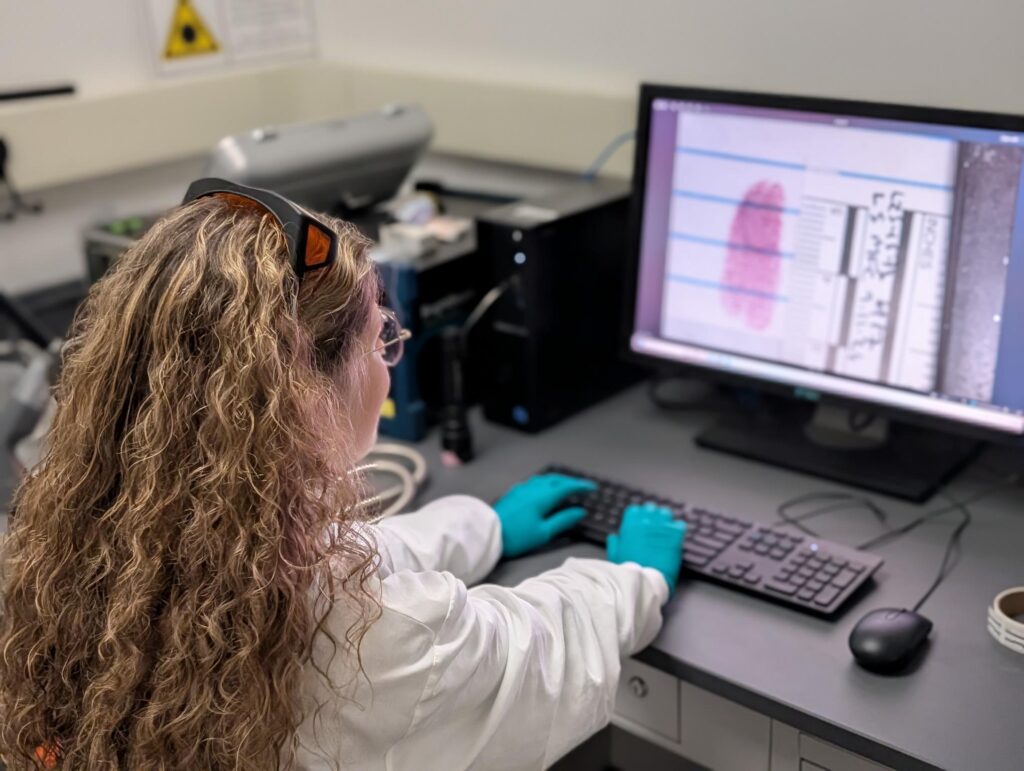
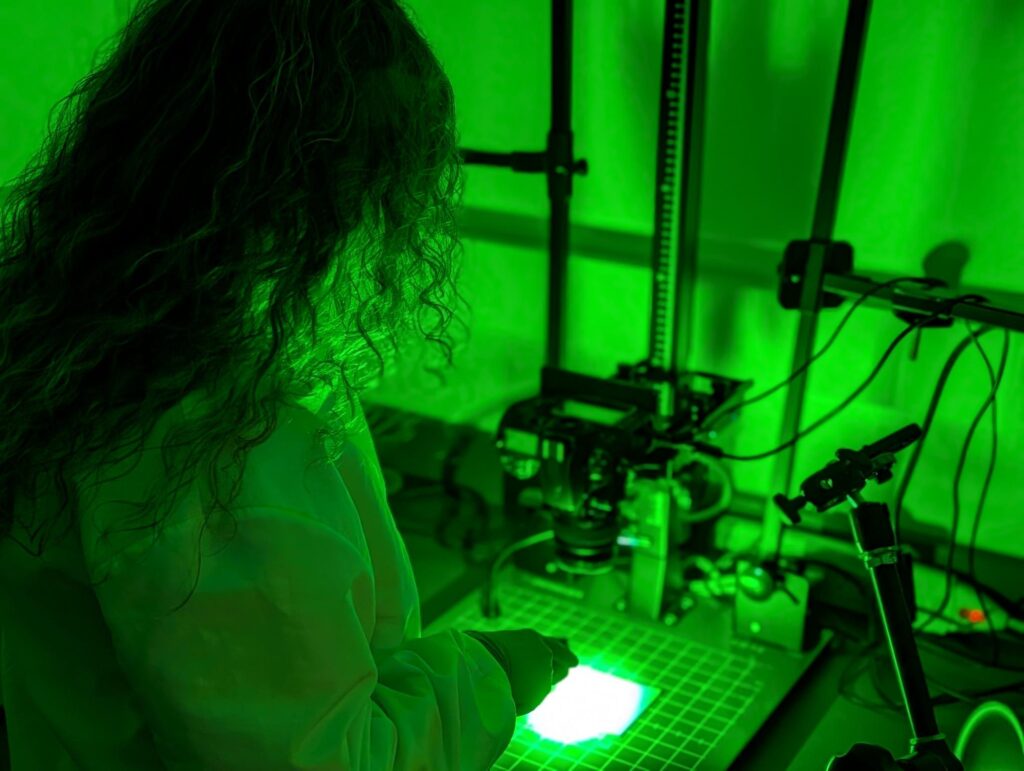
The Latent Print section examines evidence for friction ridge impressions, including fingerprints, palm prints, and occasionally footprints. These impressions can be left behind through natural skin secretions or through contact with substances such as blood. Using a variety of development techniques, examiners can visualize and preserve these impressions before conducting detailed comparisons to known prints. Latent print evidence can help link an individual to a scene or piece of evidence, connect related cases, or eliminate individuals from suspicion.
Once an impression is developed, examiners use digital imaging and specialized analysis techniques to document and evaluate the ridge detail. The section also conducts searches through the New York State Automated Biometric Identification System (SABIS) and the FBI’s Next Generation Identification (NGI) system. These databases allow unidentified prints to be searched against millions of records and can generate investigative leads. Any potential candidates identified through a database search are then manually examined by a forensic examiner to determine whether the prints can be identified, excluded, or are inconclusive.