Air quality is becoming a bigger concern in Central New York. When the air is not clean, it can affect health, both right away and over time. Poor air quality can make it hard to breathe, strain the heart, and cause serious health problems.
Air Quality, Pollutants, and the Air Quality Index (AQI)
Air quality tells us how clean the air is. It means how much pollution is in the air we breathe. Air quality can change because of wildfire smoke, car and truck exhaust, and pollution from nearby factories.
Some common air pollutants are:
Small particles (PM2.5 and PM10) that can get deep into the lungs
Ozone (O₃) near the ground, which can make breathing hard
Carbon monoxide (CO), a gas you cannot see or smell
Sulfur dioxide (SO₂), which can irritate the lungs
Nitrogen dioxide (NO₂), which comes from burning fuels
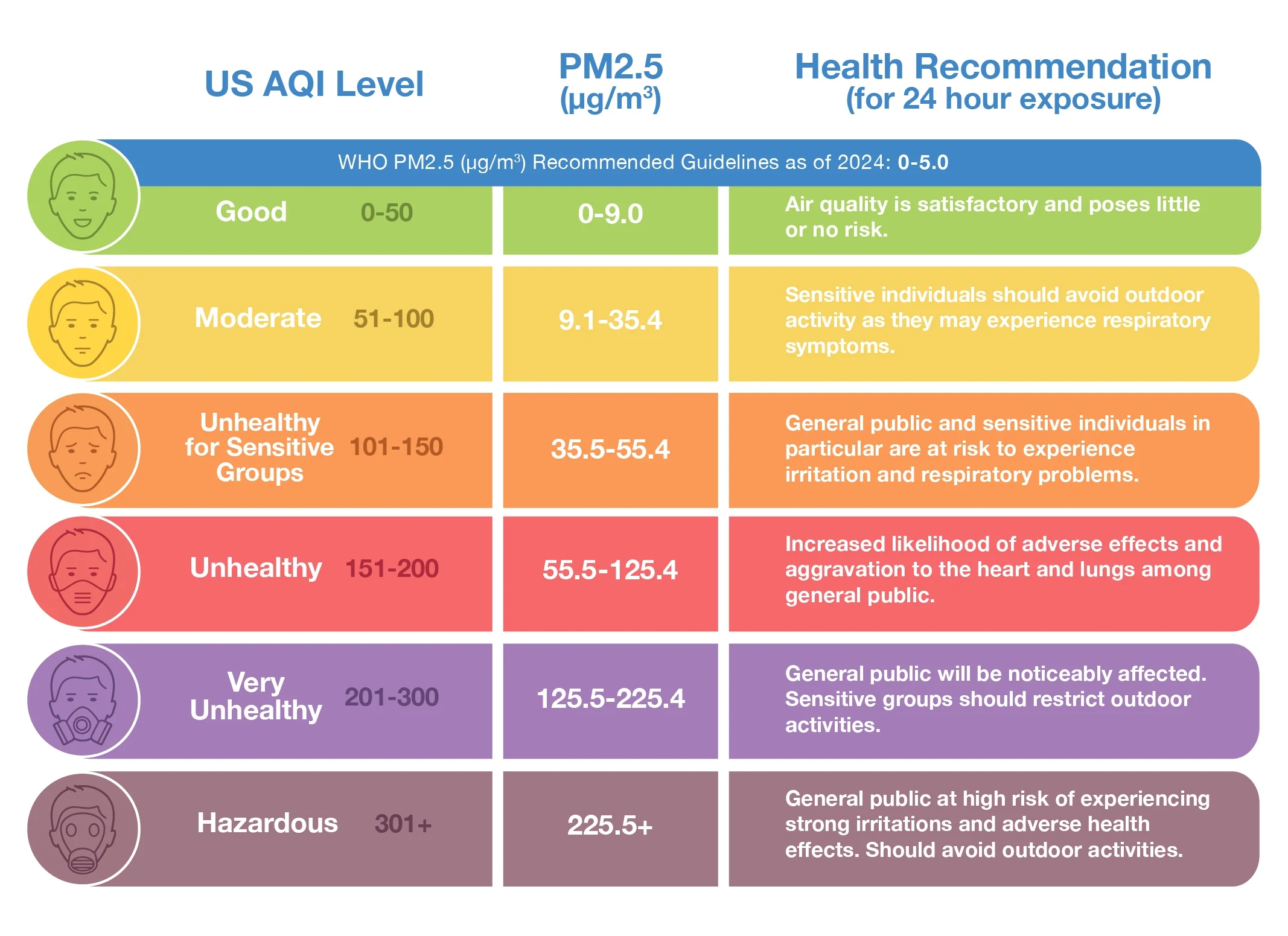
The Air Quality Index (AQI) tells us how clean or dirty the air is. It helps people know when the air might be unhealthy and when they should take steps to protect their health.
Anyone can be affected by dirty or contaminated air. Some people may get sick faster or have more serious problems when air quality gets worse. Pay extra attention to:
People with health problems, such as asthma, COPD, heart disease, or diabetes
Children, because their lungs are still growing
Older adults
Pregnant people and their babies
People who do not have stable housing
People living in homes with poor air flow or poor conditions
People who work or spend a lot of time outdoors
How Poor Air Quality Can Affect You
Dirty air can cause problems with your eyes and lungs. It can make you:
Have itchy or watery eyes
Cough or wheeze
Have more or worse asthma attacks
Have more or worse allergy attacks
Feel burning or tightness in your chest
Have trouble breathing or feel short of breath
Staying Healthy When Air Quality is Poor
Dirty air can affect anyone. The risk is higher when the AQI is 150 or above. These steps can help protect your health:
Check the Air: Look at the Air Quality Index (AQI) each day to know if the air is safe.
Limit Time Outside: When the AQI is high, people with health conditions should avoid hard outdoor activities. Others should spend less time outdoors. Go indoors if you start coughing, wheezing, or you eyes water.
Keep Indoor Air Clean: Close windows and doors. Use an air purifier if you have one. Set your air conditioner to recirculate. Avoid candles, fireplaces, and smoking indoors. Wait to vacuum until air quality improves.
Wear a Mask: A KN95 mask can help block some harmful air particles when you are outside.
Protect Babies and Young Children: Children breathe faster, and their bodies are still growing. When AQI is above 100, children should play indoors. Avoid outdoor play near busy roads, even on good air days.
Talk with Your Doctor: If you have asthma, heart disease, or other health conditions, ask your doctor how to stay safe on poor air quality days.
Know When to Get Help: Get medical care right away if you have trouble breathing, chest pain or a fast heartbeat, or become extremely tired.
Working or Playing Outside
If you spend time outside, follow these tips to stay safe when the air is bad:
Do outdoor work or play at times or places where the air is cleaner
Try to spend 30 minutes or less outside at a time
Do less hard or heavy activities
Take breaks in a clean, indoor area
Wear a KN95 mask to help filter the air
Help Protect Your Community When Air Quality is Poor
You can help keep the air cleaner for everyone:
Don’t use grills or fire pits. Avoid burning wood, charcoal, or other fuels.
Drive less. Try carpooling, taking the bus, or combining trips.
Skip gas-powered lawn tools such as blowers and mowers, especially older ones.