Summers in Central New York are getting hotter. Higher temperatures increase the risk of heat-related illnesses and can worsen conditions such as cardiovascular disease, respiratory illness, and diabetes.
Extreme Heat, Heat Waves, and the Heat Index
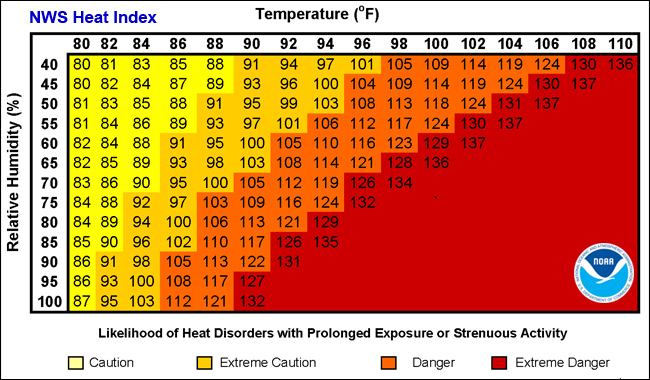
Extreme heat is when the temperature hits 90ºF or higher. If we get three or more of those very hot days in a row, that’s a heat wave. And when you combine the air temperature with the amount of humidity, you get the “heat index” — how hot it actually feels outside.
In 2025, Onondaga County had at least 17 extreme heat days, including two heat waves. August had temperatures that tied previous records. The year before, in 2024, the county saw 20 extreme heat days, including a five‑day heat wave in June. Syracuse also had a record‑breaking nine days where temperatures reached 89ºF.
Source: weather.gov, The Heat Index chart shows the “feels like” temperature when humidity is added to actual air temperatures.
Who’s at Greater Risk in Hot Weather
Anyone can be affected by heat, but some people are more at risk when temperatures rise. Keep a close eye on:
Children, especially infants and young children
Older adults
People with physical, mental, or developmental health conditions
People who are experiencing homelessness or lack quality housing
People who are socially isolated
People who lack access to cooling
People who work, play, or exercise outdoors or in indoor heat
Check on people who may be at higher risk during very hot weather. If you have a health condition that can be triggered by heat, consider wearing a medical alert bracelet or ID. This can help others know you may need help.
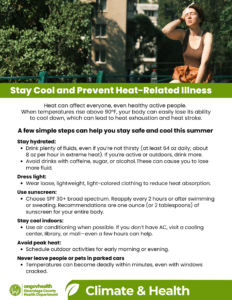
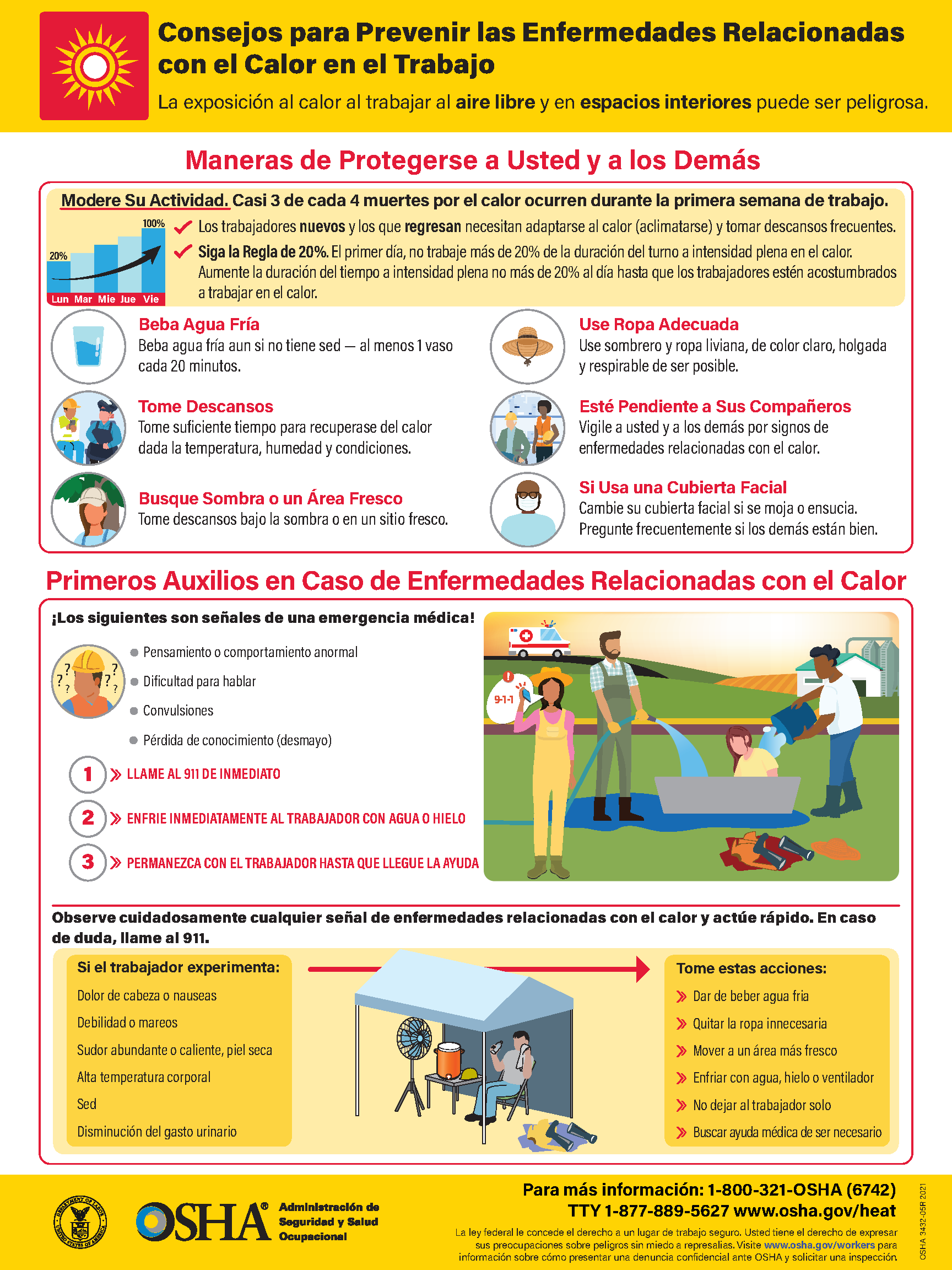
Click on image above to read flyer in other languages.
Stay Cool and Prevent Heat-Related Illness flyer available in the following languages:
Heat-related illnesses can affect anyone — even healthy people. But you can reduce your risk by following these tips:
Stay hydrated. Drink plenty of fluids, even if you don’t feel thirsty. Aim for at least 64 ounces a day. On very hot days, drink about 8 ounces (1 cup) every hour. If you’re active or spending time outdoors, you’ll need more fluids. If your doctor has told you to limit fluids or you take diuretics, ask how much you should drink.
Pregnant or breastfeeding? You’ll need extra water to stay cool and support your body. Aim for at least 80 ounces a day unless your doctor says otherwise.
Avoid drinks with caffeine, sugar, or alcohol. These can cause you to lose more fluid.
Stay inside with air conditioning if you can. Don’t have AC? Head to a mall, library, or designated cooling center. Just a few hours in AC can make a difference.
Fans might not be enough. When it’s over 90ºF, electric fans won’t prevent heat illness. Try a cool shower or bath or place cold cloths or ice packs on your neck and face.
Dress for the weather. Wear loose, lightweight, light-colored clothing to reduce heat absorption.
Use sunscreen. Use a sunscreen labeled “broad spectrum” with an SPF of 30 or higher. Sunscreen works by blocking the sun’s rays, which can keep your skin cooler. Reapply every two hours or immediately after swimming or sweating. Recommendations are one ounce (or 2 tablespoons) of sunscreen for your entire body.
Never leave people or pets in parked cars. Even with the windows cracked, the temperature can become deadly in minutes.
Skip the stove. Using the oven or stove heats up your home even more.
Avoid outdoor activities during the hottest part of the day. Plan exercise or chores for early morning or late evening.
Extra Care for Infants and Young Children:
Infant Feeding — Babies may need to eat more often to stay hydrated. Do not give water to babies under 6 months. For babies 6-12 months, breast milk or formula should still be their main source of fluids.
Stroller Safety — Go outside during the cooler parts of the day, like morning or evening. Never leave a stroller in direct sunlight. Check the seat before putting a child in it. Surfaces can get hot quickly. Do not cover the stroller with blankets or covers. These can trap heat. Use a stroller with a sunshade (UPF-rated canopy). Dress your baby in lightweight, loose clothing. Add a hat and use sunscreen!
Car Seat Safety — Cars can heat up quickly, and car seats can get very hot. Always check that the seat and buckles feel cool before placing your child in it. Cool the car before putting your child inside. Use window sunshades to block direct sunlight. Use a small fan that attaches to the headrest to improve airflow. When possible, bring the car seat inside so it doesn’t get too hot.
Heat-Related Illnesses
Heat illness happens when your body gets too hot and can’t cool down. It’s important to know the signs and take simple steps to stay safe in hot weather.
Heat cramps are the mildest type of heat illness. They happen when the body loses too much fluid and salt, usually from heavy sweating. They can occur during hard activity or in hot environments.
Signs and Symptoms of Heat Cramps:
Painful, brief, involuntary muscle spasms or twitches
Muscles that are tender to the touch
First Aid for Heat Cramps:
Move to a cool place
Drink water or sports drinks to rehydrate
Gently stretch or massage the cramped muscle
Seek medical attention if the cramps last longer than one hour
Heat exhaustion happens when your body loses too much water and salt through sweating. It occurs when to body is working hard to cool itself but starts to become overwhelmed.
Signs and Symptoms of Heat Exhaustion:
Heavy sweating
Muscle cramps
Headache
Nausea or vomiting
Tiredness and weakness
Dizziness and lightheadedness
Fainting
Pale, cool, and moist skin
Rapid heartbeat and breathing
First Aid for Heat Exhaustion:
Move to a cool place
Cool down with a cool shower or bath or apply cool, wet cloths to your skin
Drink plenty of cool water or sports drinks to rehydrate
Rest
Seek medical attention if symptoms worsen or don’t improve
Heat stroke is a severe heat-relatedness illness that occurs when the body can no longer cool itself down.
Remove excess clothing and loosen remaining clothing
Put the person in a tub of cool water or apply cool water or ice packs to skin, especially on the head, neck, armpits, and groin
Only give fluids if the person can safely drink them on their own
Staying Cool When the Power is Out
Summer storms can knock out power, and when that happens, staying safe and cool becomes your top priority.
Block the sun — Close curtains and blinds to block sun and heat.
Close off rooms — Close doors to rooms that are not in use or that are getting hot, like upper floors. Sleep on a lower floor or in the basement.
Ventilate at night — Open windows at night to let in cooler air. Close them before the sun rises to trap cool air inside. Place a damp cloth on the open window to cool the air as it passes through.
Skip the gas stove or oven — Instead grill food outside.
Stay hydrated — Drink plenty of water and avoid caffeine and alcohol.
Use water to cool — take cool showers, spritz your body with cold water, or place cool, damp cloths on your wrists, neck, and forehead.
Resources for Everyone
National Weather Service — Get the latest weather forecasts, storm outlooks, and alerts for your area.
CDC’s HeatRisk Map — Enter your zip code to see the heat risk for the week and actions you can take to stay cool.
National Grid’s Outage Map / NYSEG’s Outage Map— Stay informed about power outages and estimated restoration times in your neighborhood.
HEAP Cooling Assistance Benefit — Eligible households could receive assistance in purchasing and installing an air conditioner to help your home stay cool.
NYS’s Weatherization Assistance Program — Helps income-eligible households save on energy costs by providing home weatherization services.
Working and Recreating in the Heat
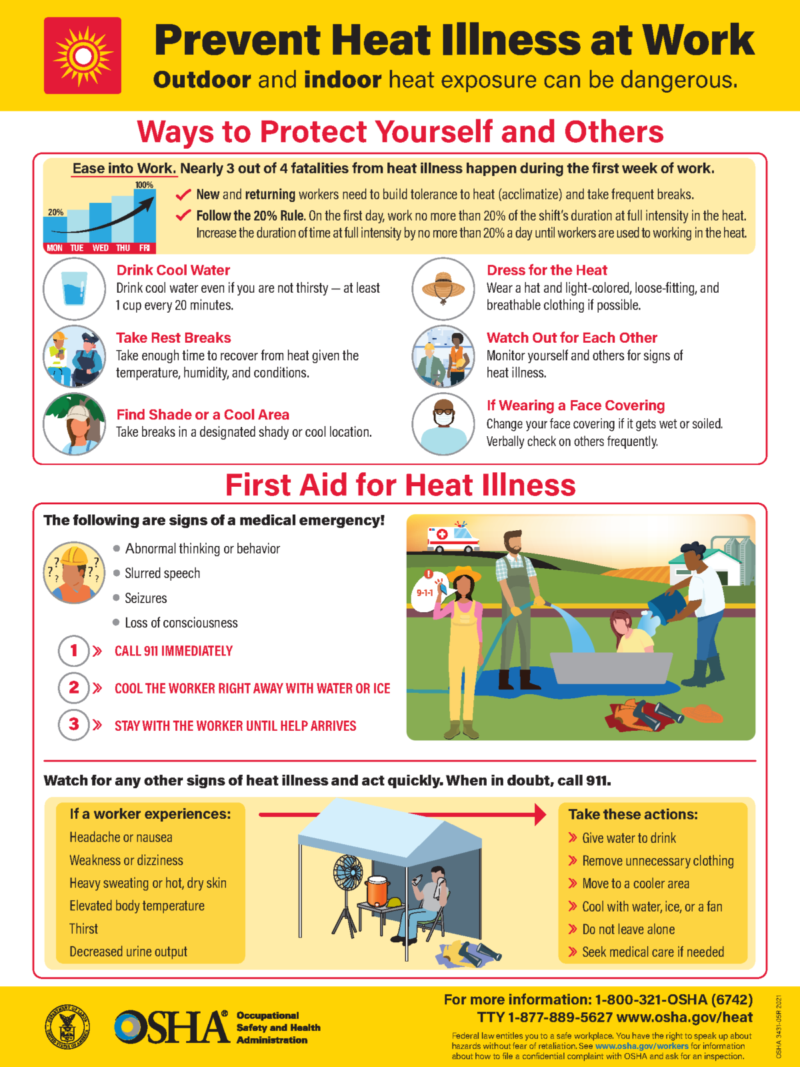
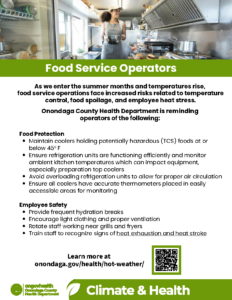
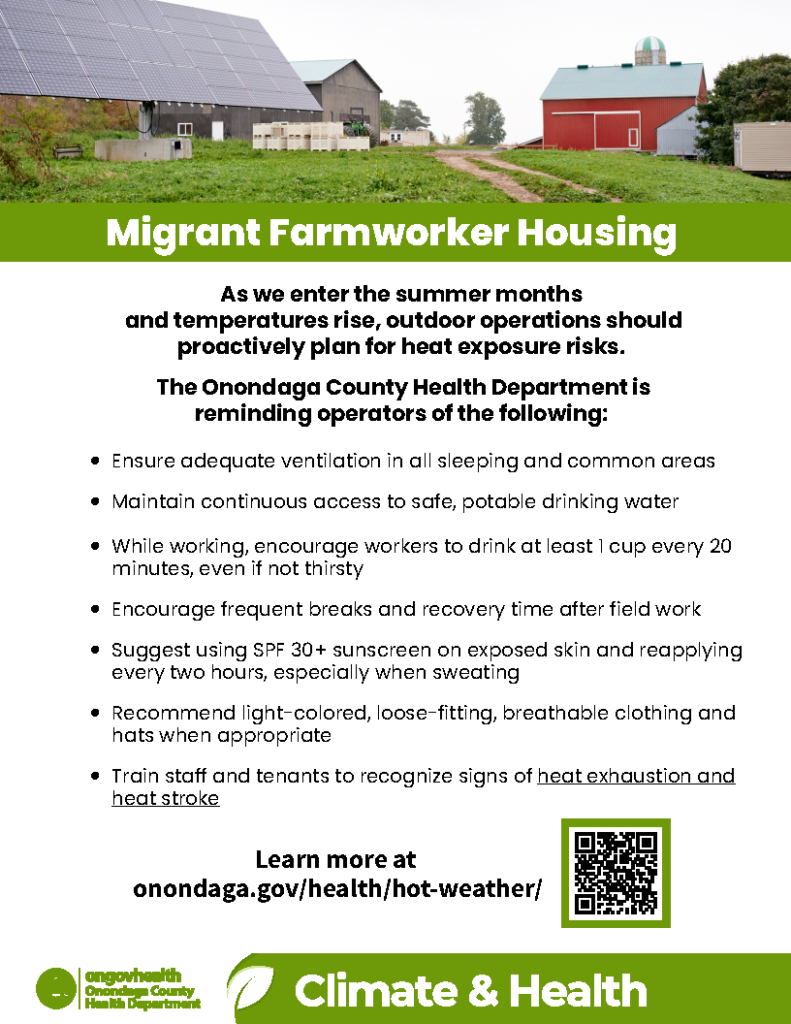
Working and recreating in the heat, including places indoors like restaurant kitchens and gyms without air conditioning, can be dangerous. Here’s how to take extra care:
Try to schedule strenuous work or exercise for early morning or evening. Avoid peak heat hours (afternoon) outdoors when possible.
Hydrate often. Aim to drink 8 ounces of cool (not cold) water every 15 minutes. Sports drinks can help replace electrolytes lost through sweat (talk to your doctor first if you’re on a low-salt diet). Don’t wait until you’re thirsty to drink water.
Take breaks in the shade or air conditioning. Don’t wait until you feel overheated — regular rest is key.
Dress for the sun. Wear lightweight, loose-fitting, light-colored clothing, plus a wide-brimmed hat and sunglasses. Use sunscreen with SPF 30 or higher that says “broad spectrum” or “UVA/UVB protection” and reapply as directed.
Use the buddy system. Check in with coworkers regularly to make sure everyone is staying hydrated, taking breaks, and watching for signs of heat-related illness.
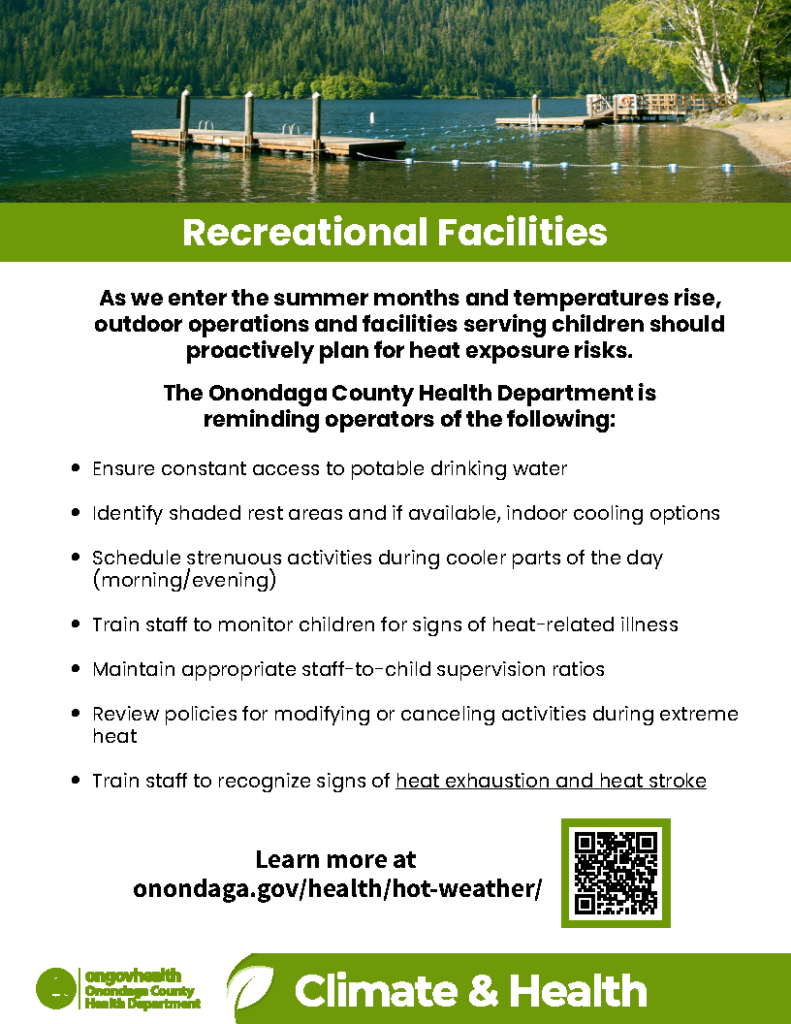
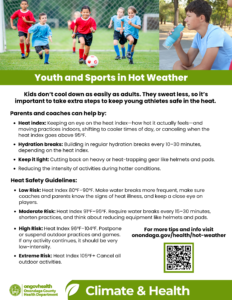
Kids don’t cool down as easily as adults. They sweat less, so it’s important to take extra steps to keep young athletes safe in the heat. Parents and coaches can help by:
Keeping an eye on the heat index—how hot it actually feels—and moving practices indoors, shifting to cooler times of day, or canceling when the heat index goes above 95°F
Building in regular hydration breaks (every 10–30 minutes, depending on the heat index)
Cutting back on heavy or heat‑trapping gear like helmets and pads
Reducing the intensity of activities during hotter conditions
It’s important to monitor the heat index during practice or games. Use the CDC HeatRisk Map to monitor local heat risk where you are.
Heat Index 80°F–90°F–Low Risk: Make water breaks more frequent, make sure coaches and parents know the signs of heat illness, and keep a close eye on players.
Heat Index 91°F–95°F–Moderate Risk: Require water breaks every 15–30 minutes, shorten practices, and think about reducing equipment like helmets and pads.
Heat Index 96°F–104°F–High Risk: Postpone or suspend outdoor practices and games. If any activity continues, it should be very low‑intensity.
Heat Index 105°F+–Extreme Risk: Cancel all outdoor activities.
Proper hydration is key in helping to prevent heat illness in young athletes.
Pre‑hydration: Athletes should show up already hydrated. A good rule of thumb is to drink 16–24 fl. oz. of water in the two hours before practice, plus another 8–10 fl. oz. in the 10–20 minutes right before activity begins.
During Activity: Encourage athletes to drink 6–12 ounces of water every 10–20 minutes to stay ahead of dehydration.
Rehydration: Athletes should check their weight before and after training and gameplay. For every pound lost during activity, they should drink 16–24 fl. oz. of water within about two hours after activity.
Here are some additional tips to help prevent heat illnesses:
Acclimatization: Slowly increase the length and intensity of outdoor practices over 7–14 days so athletes can adjust to the heat.
Clothing: Choose light‑colored, loose‑fitting clothing to help the body stay cool.
Sunscreen: Sunscreen helps block the sun’s rays keeping the skin cooler. Sunburns slow the body from cooling down by trapping heat.
Equipment: Reduce extra gear—like helmets or pads—when it isn’t needed for the activity.
Cooling: Use shade, misting stations, ice towels, and other cooling tools to help athletes stay comfortable and safe.