Firearms
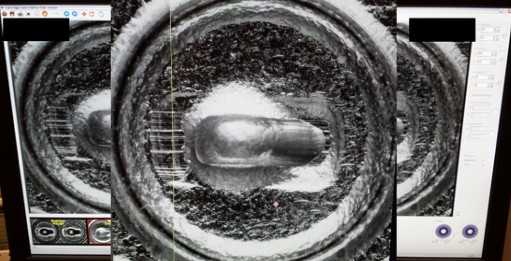
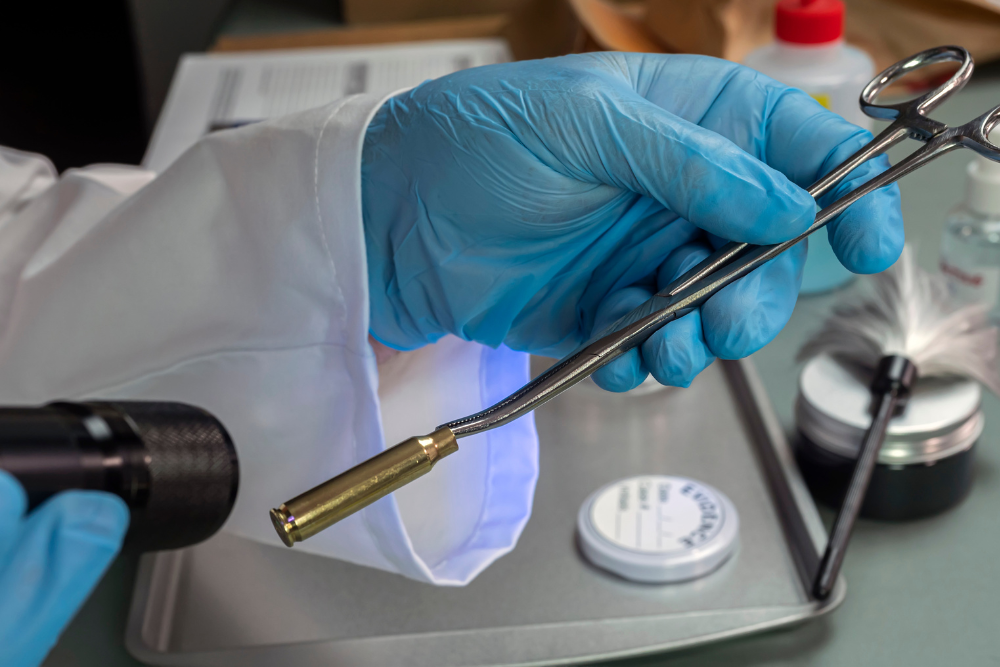
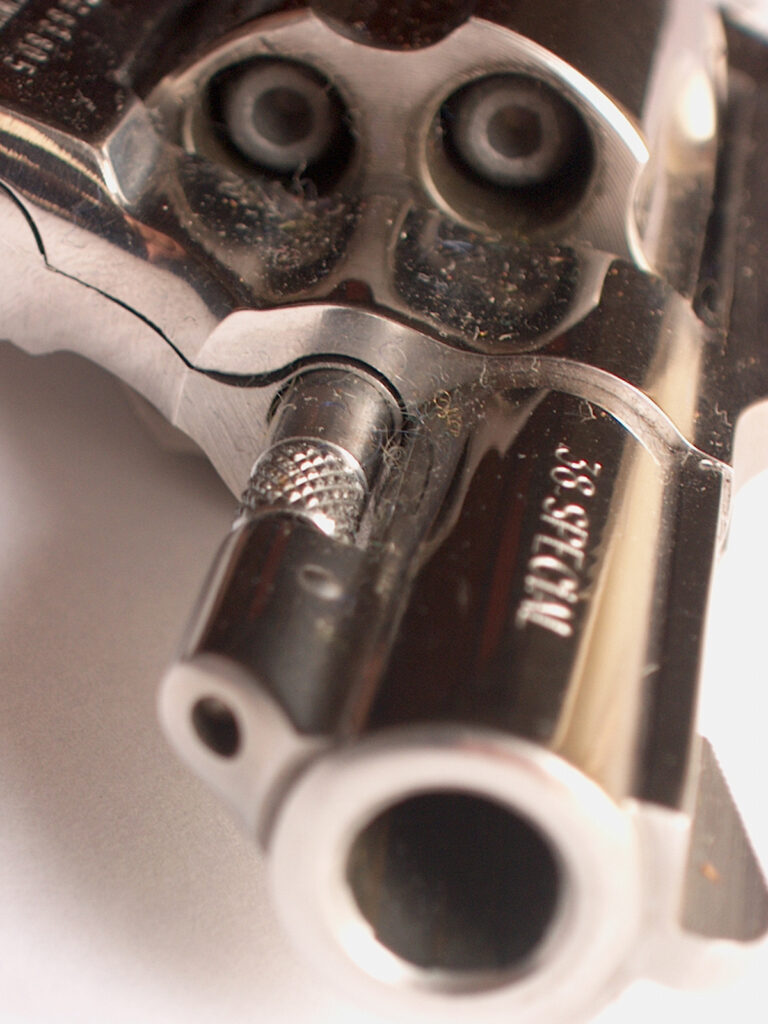
The Firearms section examines firearms to determine their operability status.. Firearms examiners are also responsible for determining whether or not a projectiles or cartridge cases recovered at a crime scene were fired from the same or a particular firearm. The laboratory uses a computerized database, called the Integrated Ballistic Identification System, to aid in connecting shootings from different crime scenes. The section also provides serial number restoration analysis and muzzle-to-target distance determinations.
Services Offered
Serial Number Restoration
Serial numbers uniquely identify items such as firearms. When these markings are obliterated, forensic techniques—including polishing, chemical etching, and magnetic particle inspection—can often restore them to aid in tracing the object.
Distance Determination
When a cartridge is discharged, burnt and unburnt gunpowder and other ammunition residues are expelled from the firearm muzzle. These residues may be deposited on items, such as clothing. These items are microscopically and chemically processed to develop to help visualize gunshot residue patterns. These patterns are compared to test patterns fired at known distances with the suspected firearm and ammunition to estimate the muzzle-to-target distance.
NIBIN Entry
NIBIN is a database of cartridge case images from crime scenes and test fires. Evidence entered into the system is correlated against existing records to identify potential links between cases. When toolmark similarities are found, a Potential Candidate for Comparison (PCC) is generated. PCCs are preliminary and must be confirmed through microscopic comparison.