
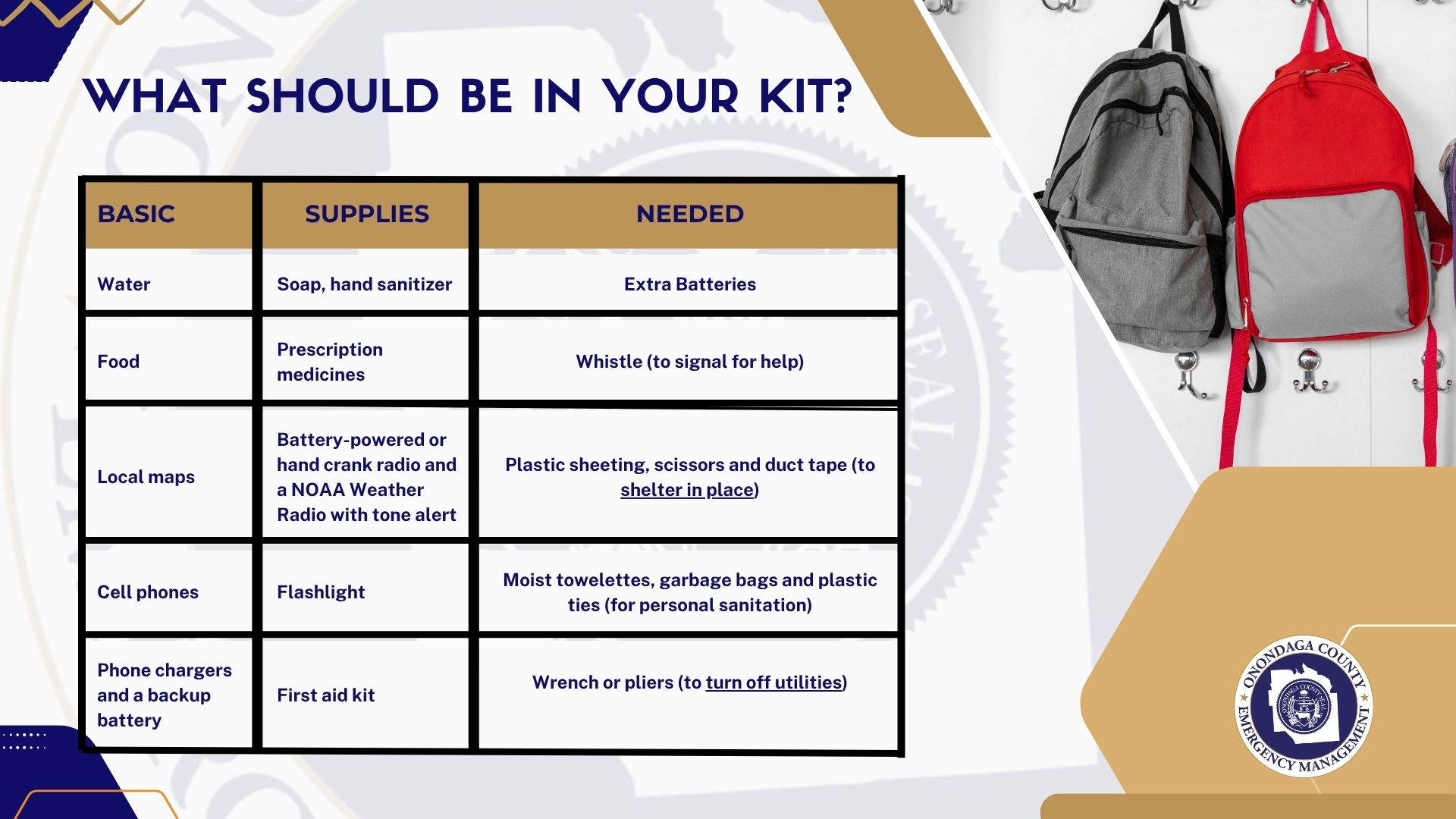
What should be in your kit? Basic supplies needed: Water, Food, Local maps, cell phones, phone chargers and a backup battery, soap and hand sanitizer, prescription medicines, Battery-powered hand crank radio and a NOAA Weather Radio with tone alert. Flashlight, first aid kit, extra batteries, whistle, plastic sheeting, scissors and duct tape, moist towelettes, garbage bags and plastic ties, wrench or pliers to turn off utilities.

The Essentials of a to-go kit:

A disaster supplies kit is a collection of basic items your household may need in the event of an emergency. Being prepared means having your own food, water, and other supplies to last for several days.


What belongs in your kit?

After an emergency occurs you may be forced to survive on your own for several days. Building a kit can be the difference between having the items needed to stay alive or not. There are basic supplies that belong in a supply kit and there are also additional supply unique to each individual. Read through the following items that could belong in your kit. You can download a printable version of these items below to take with you to the store.

Basic Supplies Kit

Each supply kit should feature these basic but crucial items needed to handle the time after an emergency.

Water
Food
Radio
Flashlight
First aid kit
Extra batteries
Whistle
Dust mask
Plastic sheeting, scissors and duct tape
Moist towelettes, garbage bags and plastic ties
Local maps
Wrench or pliers (to turn off utilities)
Manual can opener
Cell phone with chargers and a backup battery

Additional Emergency Supplies

Every kit will be different to meet the needs of each individual in a family or household. Consider these items when adding additional items to your emergency supply kit.

Soap, hand sanitizer and disinfecting wipes
Prescription medications
Non-prescription medications such as pain relivers, anti diarrhea, antacids or laxatives
Prescription eyeglasses and contact lens solution
Infant formula, bottles, diapers, wipes and diaper rash cream
Pet food and extra water for your pet
Cash or traveler’s checks
Important documents insurance policies, ID, and bank account records
Sleeping bag or warm blanket for each person
Complete change of clothing appropriate for your climate and sturdy shoes
Fire extinguisher
Matches in a waterproof container
Feminine supplies and personal hygiene items
Mess kits, paper cups, plates, paper towels and plastic utensils
Paper and pencil
Books, games, puzzles or other activities for children

Maintaining a kit

It is important to continually update your kit as the months and years go by. This ensures everything is up to date and not past any items expiration date
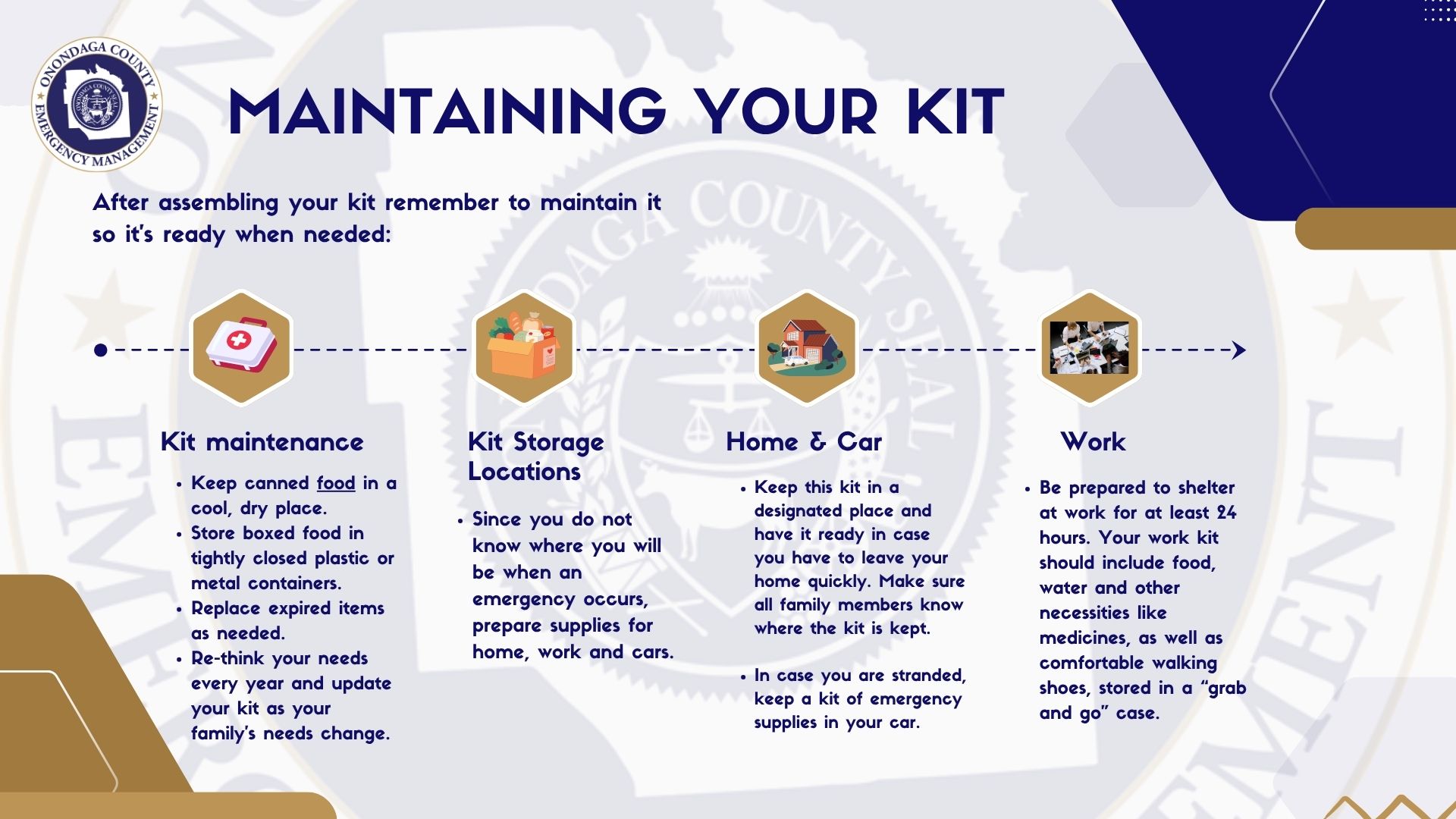
Maintaining your kit. After assembling your kit remember to maintain it so it’s ready when needed: Kit maintenance Keep canned food in a cool, dry place.
Store boxed food in tightly closed plastic or metal containers.
Replace expired items as needed.
Re-think your needs every year and update your kit as your family’s needs change.
Kit Storage Locations: Since you do not know where you will be when an emergency occurs, prepare supplies for home, work and cars. Home & Car: Keep this kit in a designated place and have it ready in case you have to leave your home quickly. Make sure all family members know where the kit is kept.

In case you are stranded, keep a kit of emergency supplies in your car. Work: Be prepared to shelter at work for at least 24 hours. Your work kit should include food, water and other necessities like medicines, as well as comfortable walking shoes, stored in a “grab and go” case.

Learn more ways to stay prepared


*Credit: The information on this page is credited to and adapted from FEMA and Ready.gov resources. Their materials were used as foundational guidance and adapted to provide Onondaga County–specific preparedness information.