
Receiving Emergency Alerts and Notifications
Stay Informed:
There are many types of emergency alerts designed to notify you during a crisis. It’s important to understand what each alert means and how it can help you make informed decisions when every second counts.
Emergency Notification System
The NY Alert Emergency Notification System is utilized to notify Onondaga County residents in emergency situations where events have occurred and special instructions to residents in a specific neighborhood are needed.
Examples of alerts you may receive include weather warnings or notifications about hazardous material spills. You could also receive alerts for situations such as a barricaded suspect or an active threat in the area you’re in. These types of alerts are initiated by the local responding agency and then sent to the affected area by the 911 Center. If you use NY Alert, you can customize the types of alerts you want to receive, allowing you to choose the specific notifications that matter most to you.
This system will allow you to receive notifications via landline, cellular phone or e-mail by simply following the registration steps. Existing land line telephones with active service are registered to receive emergency notifications through the system.
Although this is a free service administered by Onondaga County Department of Emergency Communications, you may be charged a standard fee from your wireless provider if you exceed your current data plan for receiving voice or SMS calls. Onondaga County is not responsible for any charges that may be incurred as a result of receiving these alerts.
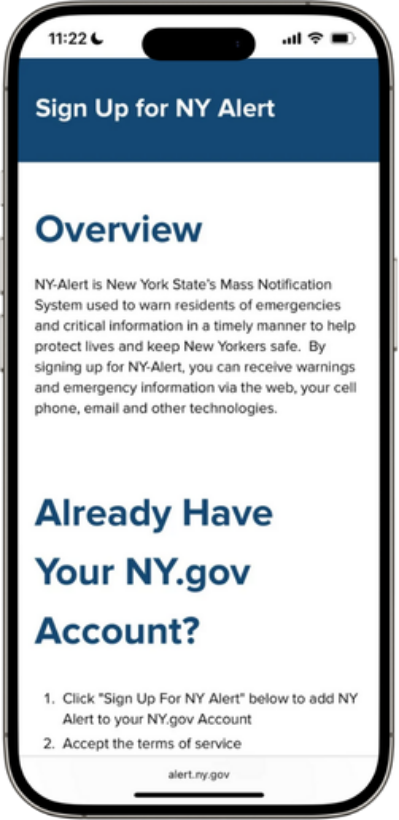
You must create or sign in with a my.ny.gov account to get access to NY Alert.
The Test Alerts setting in your phone has no effect on receiving actual Weather Emergency Alerts. All mobile phones sold in the U.S. have the test setting off as shipped from the factory.
Integrated Public Alert and Warning system (IPAWS)
IPAWS is FEMA’s national system for local alerting.
It gives federal, state, local, tribal, and territorial public safety agencies the ability to send WEAs, EAS alerts, weather and non-weather-related emergency messages simultaneously through NOAA weather radios, and alerts through systems like sirens and digital billboards.
There are no costs to receive alerts through IPAWS. The alerts can be locally targeted to ensure only devices in the affected area receive alerts.
IPAWS alerts can be displayed in English or Spanish and can include multilingual audio. It can also include images and text to speech capability to accommodate those with functional needs.
Wireless Emergency Alerts
Short emergency alerts authorities can send to any WEA-enabled mobile device in a locally targeted area.
WEAs have a unique tone and vibration, both repeated twice. WEA messages are free and will not count towards texting limits on your wireless plan.
WEAs look like text messages but are designed to get your attention with a unique sound and vibration repeated twice.
WEAs come in the form of flash floods, tornados, and severe thunderstorm warnings are all examples of WEAs. Weather related alerts are initiated and sent out by the National Weather Service. Amber Alerts will be initiated and sent out by the New York State Police.
WEAs can be sent to your mobile device when you may be in harm’s way, without the need to download an app or subscribe to a service.
Follow the action advised by the alert. The message will show the type and time of the alert, any action you should take, and the agency issuing the alert. The message will be no more than 360 characters. You can get more details from your local authorities, local news or trusted social media sources.
Emergency Alert System
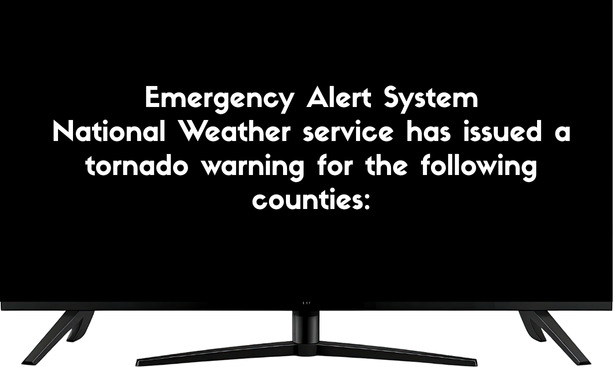
The Emergency Alert System (EAS) is a national public warning system that allows the president to address the nation within 10 minutes during a national emergency.
The President has sole responsibility for determining when the national-level EAS will be activated. FEMA and the FCC are responsible for national-level tests and exercises.
The EAS is sent through broadcast TV and radio, satellite digital audio services, direct broadcast satellite providers, cable television systems and wireless cable systems.
Messages cover a large geographic footprint. Emergency message audio/text may be repeated twice, but EAS activation interrupts programming only once, then regular programming continues.
FEMA Mobile App
The FEMA App allows you to receive real-time weather and emergency alerts, send notifications to loved ones, get preparedness strategies and more.
Receive real-time weather and emergency alerts from the National Weather Service for up to five locations nationwide.
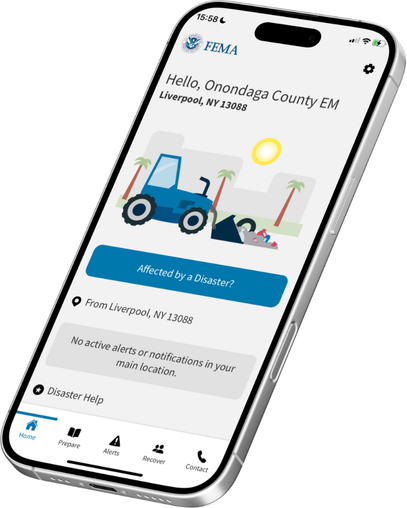
The FEMA App can help provide preparedness tips for many different kinds of emergencies and disasters.
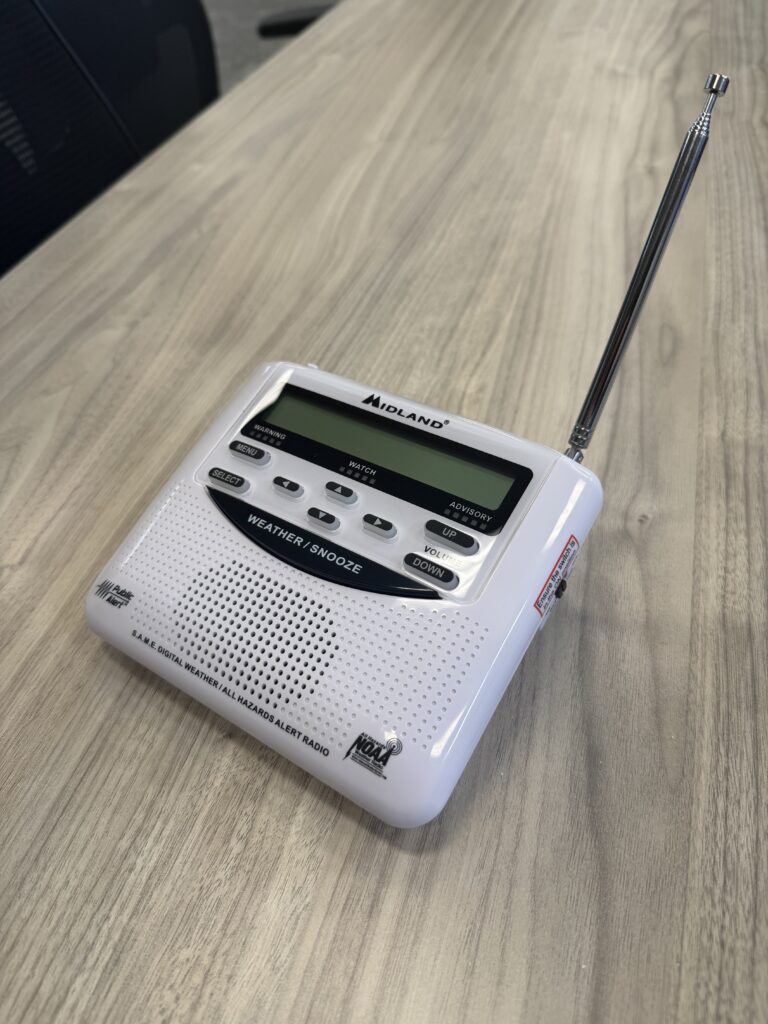
National Oceanic and Atmospheric Administration
NOAA Weather Radio All Hazards (NWR) is a nationwide network of radio stations broadcasting continuous weather information directly from the nearest National Weather Service office.
NWR broadcasts official Weather Service warnings, watches, forecasts and other hazard information 24 hours a day, 7 days a week.
NWR also broadcasts alerts of non-weather emergencies such as national security or public safety threats through the Emergency Alert System.
NWR is an “All Hazards” radio network, making it your single source for comprehensive weather and emergency information. In conjunction with Federal, State, and Local Emergency Managers and other public officials, NWR also broadcasts warning and post-event information for all types of hazards – including natural (such as earthquakes or avalanches), environmental (such as chemical releases or oil spills), and public safety (such as AMBER alerts or 911 Telephone outages).
Local Media:
Paying attention to local media stations is an important way to stay informed about impending weather or incidents in your community. Enabling notifications on their mobile apps, watching their broadcasts, and listening to local updates can help you stay aware of the latest forecasts and events happening in our area. Below are links to local stations to help you stay informed.
Media Outlets:

CNY Central

NewsChannel 9

Spectrum News 1

Syracuse.com

WAER 88.3
WRVO 89.9
WSYR 570
*Credit: Portions of the information on this page are adapted from FEMA and Ready.gov resources. Their materials were used as foundational guidance and adapted to provide Onondaga County–specific preparedness information.