
Evidence Collection & Submission Manual – CFS Evidence Submission Guidelines – Fire Debris/Ignitable Liquids
Fire Debris/Ignitable Liquids
Samuel VanDee, Senior Forensic Chemist
The Forensic Chemistry section of the Center for Forensic Sciences conducts analysis of fire debris samples. Submitted items may include liquids and various types of debris, such as carpet or flooring, clothing, remnants from automobile fires, and liquids collected from suspected ignitable liquid containers like gas cans. Forensic chemists use passive adsorption extraction/elution techniques followed by gas chromatography-mass spectrometry (GC-MS) to identify ignitable liquid residues, classifying them according to the categories outlined in ASTM E1618.
Submission Guidelines
All fire debris related evidence should be submitted to the CFS as soon as possible.
Proper Collection / Proper Handling
- Ignitable liquid residue is volatile and should be submitted to the CFS as soon as possible to prevent evaporation and container failure.
- Comparison samples should be collected and packaged separately from the debris samples. The outer packaging should be clearly marked as a comparison sample. A comparison sample is defined as:
- A sample of material collected from a fire scene which is, to the best of the investigator’s knowledge, identical in every respect to a sample suspected of containing ignitable substances, but does not contain ignitable substances.
- A sample of suspected ignitable substance submitted for the purpose of comparing with any ignitable liquid substance separated for a debris sample.
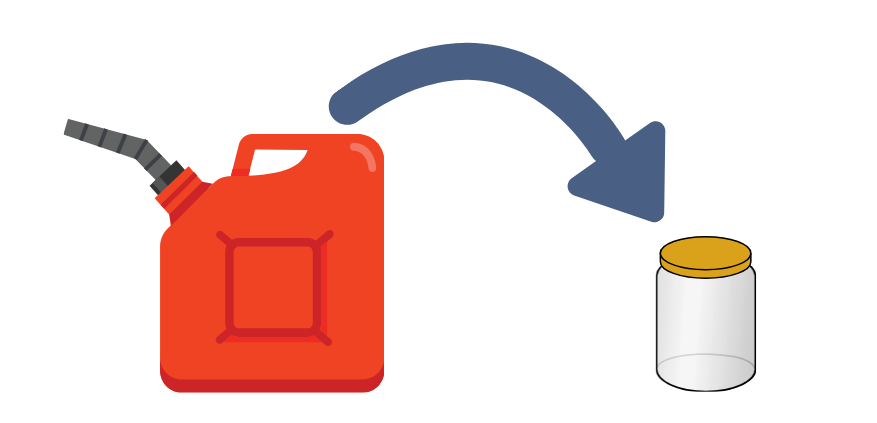
- Liquid samples should be removed from large containers and put into smaller ones before submission to the CFS.
The selection of the appropriate container depends on the physical state and characteristics of the sample and the type of test requested. The container used must seal in any volatile ignitable liquid vapors and prevent cross contamination between samples. Acceptable containers include:
- Cans – new, clean, lined metal cans of various sizes
- Jars – new, clean, Mason jar
- Bags – Nylon or polyester bags made specifically for use in fire debris analysis
Common consumer plastic bags, paper bags, and cardboard boxes are NOT acceptable since the ignitable liquid vapors can evaporate through the packaging.
Solid Samples: Examples – Wood, plastic, carpet and clothing
- Cans, jars and bags are acceptable containers.
- Containers should not be filled beyond two-thirds and packing down of materials within the container should be avoided.
- Ensure that the containers are closed securely to prevent loss of volatile vapors. Clean the rim groove before placing the lid on the can.
Liquid Samples:
Standing pools: Liquid samples can be collected with clean unused:
- Syringes
- Eye droppers
- Pipettes
- Sterile gauze bandages or cotton balls.
When gauze or cotton balls are utilized, a comparison sample of the gauze/cotton balls must be submitted in a separate container. All other liquid collection tools should be discarded, NOT included with the evidence sample.
Container Contents: One ounce or five milliliters of liquid sample is sufficient for analysis. Liquid samples should be secured in small screw cap bottles, suitable for volatile substances. The bottle should then be secured inside of a clean unused can. Clean paper towels can be used to protect the bottle inside of the can.
Soil Samples: Examples – Dirt, sand, leaves, grass, and foliage
Soil readily absorbs and retains ignitable liquid residues, which makes it a good source for laboratory analysis.
- Collect in new, clean, unused proper cans.
- Sample should be refrigerated or frozen. Soil contains bacteria which will destroy hydrocarbon products. Freezing of the sample will preserve the integrity of the evidence.
Samples with Multiple Purposes
Investigators will on occasion secure evidence that will require multiple types of testing such as:
- Ignitable liquid and residue identification
- Latent Prints
- DNA
Situations such as these may require the investigator to seek input from the laboratory personnel prior to collecting the sample. In some cases the type of test requested will dictate the type of container to be used and the sequence of the tests to be performed. In some cases multiple testing will not be possible and priority will need to be established for the type of tests desired. Procedures used to perform one test may eliminate the possibility of other tests. In these cases, the investigator should discuss with the CFS which form of evidence and test will be most useful for the case.
Physical Evidence NOT Analyzed
- Explosives and explosive residues
- Flares
- Fuses
- Thermite and related materials
- Commercial propellants such as black powder and modified black powder
- Powders removed from commercial fireworks or pyrotechnic devices